Preparations for disinfection

 Preparations for disinfection are specialized chemical agents designed to eliminate biological triggers that exacerbate allergic conditions. From neutralizing mold spores in the home to providing gentle skin antisepsis for patients with atopic dermatitis, these products create a "sterile shield" that reduces the burden on an overactive immune system.

Description

What is Preparations for disinfection and How Does it Work?

In the context of allergy care, Preparations for disinfection serve as a "Pre-emptive Neutralizer." Unlike standard cleaners that just move dust around, these disinfectants are formulated to denature—or "unfold"—the specific protein structures of allergens like dust mite waste and fungal spores. By destroying the biological integrity of these particles, they prevent the immune system from recognizing them as threats, thereby stopping the allergic reaction before contact occurs.

Indicators for Environmental and Skin Disinfection

Proper disinfection is necessary when the following symptoms or triggers are present:

  • Mold-Induced Respiratory Distress: Chronic wheezing, coughing, or "heavy" breathing caused by invisible mold spores in damp areas of the home like bathrooms or basements.

  • Atopic Dermatitis Complications: For those with eczema, the skin's barrier is broken, making it prone to "Staph" infections that cause painful, oozing yellow crusts and worsen the underlying allergy.

  • Perennial Allergic Rhinitis: Constant morning sneezing and congestion caused by high concentrations of dust mites living in upholstery, carpets, and bedding.

  • Contact Sensitivity: The need to sanitize surfaces or hands after contact with known external irritants like animal dander or public surface contaminants that can be transferred to the face.

Mechanism of Action

Think of allergens as "active landmines" hidden in your carpet or on your skin. Standard cleaning is like walking over them with soft shoes—you might not set them off, but they are still there. Preparations for disinfection act as a "de-mining crew." They use chemical agents to physically disassemble the "trigger mechanism" of the landmine (the allergen protein). Once the protein is disassembled, it is inert; even if it enters your nose or touches your skin, it cannot "explode" into an allergic reaction.

Expert Pharmacist Insight

For allergy sufferers, the type of disinfectant is as important as its strength. I advise against using heavy chlorine-based bleaches for routine allergen control. The strong fumes are "non-specific irritants" that can trigger an asthma attack or chemical sensitivity. Instead, look for preparations containing hydrogen peroxide or stabilized alcohol. These are highly effective at killing mold and denaturing proteins but evaporate into harmless substances, leaving no irritating residue or scent for sensitive airways.

Frequently Asked Questions (Q&A)

Can disinfecting my house really reduce my need for allergy pills?
Yes. Allergy is a "threshold" disease. Your body can usually handle a small amount of allergens, but once you cross your specific "threshold," symptoms start. By using preparations for disinfection to lower the amount of mold and mites in your home, you stay below your threshold and experience significantly fewer symptoms.

Is it safe to use disinfectants on my skin if I have eczema?
You must use products specifically labeled as "antiseptics" for skin use. Regular household disinfectants are far too harsh. For allergic skin, look for pH-balanced antiseptics that are designed to kill harmful bacteria without damaging the delicate skin barrier or causing further dryness.

How do I use these products to kill dust mites?
Dust mites themselves are hard to kill with just a spray, but specialized disinfectants can be added to your laundry or used on non-washable surfaces to neutralize the proteins in their droppings. This "denaturing" process makes the droppings harmless to your immune system.

Do these products help with "Pet Allergies"?
They can be very helpful. Using a disinfectant on hard surfaces where a pet sleeps helps break down the proteins found in their saliva and dander. These proteins are very "sticky" and otherwise hard to remove through simple dusting or sweeping.

Can I use these preparations on my kitchen counters?
Yes, but you should choose "food-safe" disinfectants. These are excellent for preventing "cross-contamination" if someone in the house has a severe food allergy (like peanuts or shellfish), ensuring that no residual proteins remain on the preparation surfaces.

Do these products kill mold spores?
Yes. High-quality disinfectants are "fungicidal," meaning they don't just stop mold from growing; they physically kill the spores. This prevents the spores from becoming airborne and being inhaled, which is a major trigger for allergic asthma.

Is "natural" disinfection like vinegar effective for allergies?
Vinegar is a mild acid that can kill some bacteria, but it is not a registered disinfectant and is generally not strong enough to denature complex allergen proteins or kill tough mold spores effectively. It may clean the surface, but it won't "disarm" the allergens.

How often should I disinfect "allergy hotspots"?
In bathrooms and kitchens where mold grows, once a week is recommended. For bedding and upholstery in a house with dust mite allergies, a specialized treatment every 2-4 weeks can make a measurable difference in air quality and morning symptoms.

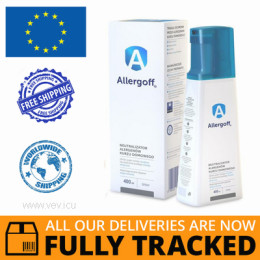
ALLERGOFF SPRAY 400ML — MADE IN POLAND — FREE SHIPPING
In Stock
ALLERGOFF SPRAY House dust allergen neutraliser. Supports the treatment of symptoms of allergic diseases. It protects against the pathogenic effects of house dust mite allergens, pollen of plants, domestic animals and mold fungi. It improves well-being and reduces allergy symptoms. It works eff..
Showing 1 to 1 of 1 (1 Pages)

Buyers Online

AI Pharmacist • VEV.ICU

Online | Multilingual

v2.24
Hi! I am your AI assistant. Describe your problem, and I'll help you find the right medicine.
You can write to me in any language you prefer.
I don't answer technical questions (prices, delivery, payments).