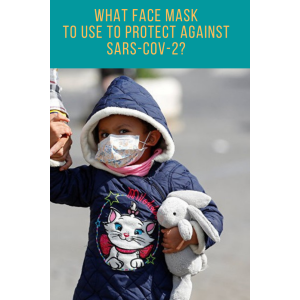
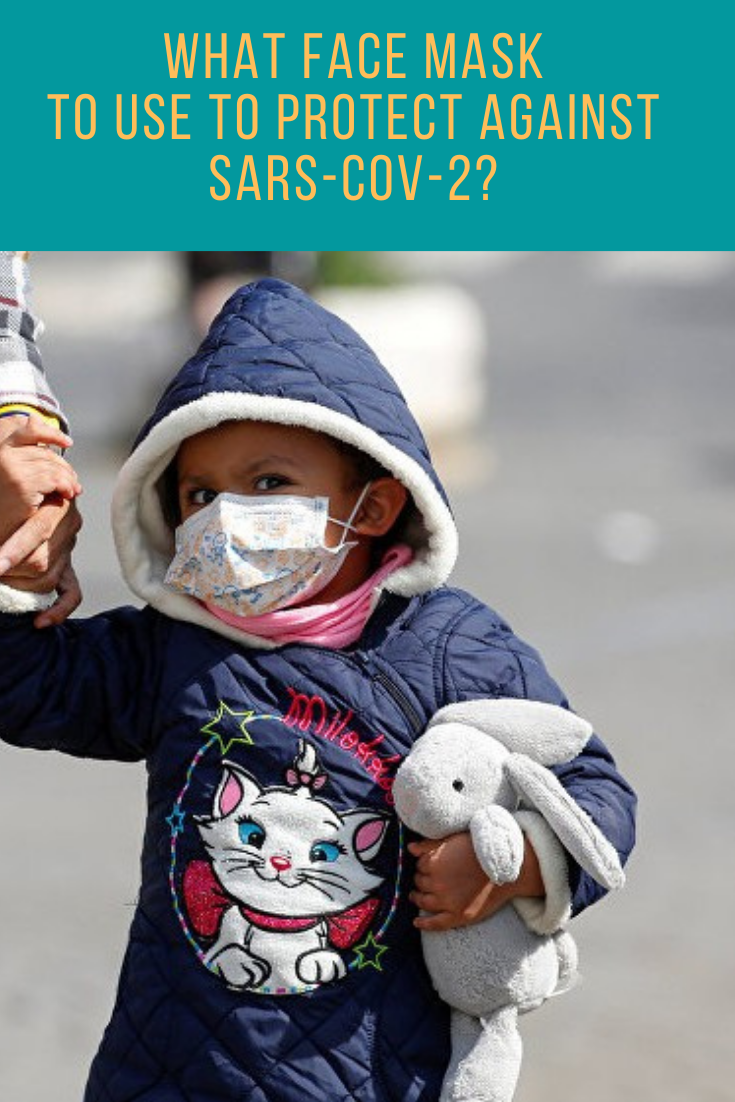
What face mask to use to protect against SARS-CoV-2?

- 04 November 2020 09:08:32
- Views: 1562
Many
countries around the world have introduced an order to cover the lower parts of
the face, nose, and mouth in public places to reduce the risk of SARS-CoV-2
infection. It is widely advised to cover mouth and nose at least until an
effective coronavirus vaccine is developed and widely available. Many different
types of protective face masks can be currently found in pharmacies and stores.
They have different purposes and are made of different materials. However, the
question is - does a face mask protect against the coronavirus?
According
to the recommendations of the WHO (World Health Organization), protective masks
should be worn by those:
sick,
coughing, sneezing, with clear symptoms of the disease,
attending
the sick.
The
European Center for Disease Prevention and Control agrees with the position of
the WHO but also points out that wearing masks in public places, shops or
public transport can reduce the risk of spreading the virus by people who do
not exhibit symptoms of the disease.
Keep in
mind that the coronavirus is airborne - it is spread through coughing,
sneezing, or even a conversation with an infected person. The virus can enter
the body through the nose, mouth, and eyes (directly or by touch). Wearing
protective masks reduces the risk of this happening.
What types of protective masks are there?
The degree
to which a mask can protect you depends on the type of mask you use. On the
market, you can find surgical masks that protect the lower part of your face
and protective masks, the so-called half masks that protect the respiratory
tract against the ingress of microorganisms.
A surgical
mask is made of two or three layers of plastic - polypropylene. There are two
types of surgical masks:
type I – with
the filtration efficiency of >95 (two-layer mask),
type II – with
the filtration efficiency of >98; exhibits resistance to permeation
(three-layer mask).
Surgical
masks are subject to European Standard EN 14683: 2019 + AC. This type of face
mask is a barrier to body fluids (saliva, blood, lymph) that can transfer from
a sick person to a healthy person. Surgical masks are a barrier to
microorganisms with a diameter of up to 1 micrometer. It is therefore permeable
to viruses whose size is measured in nanometers. A surgical mask protects very
well against further transmitting the virus by spreading in the cloud of
aerosol generated when sneezing or coughing. The bodily fluids carrying the
virus are stopped on the inside of the mask, potentially containing a virus.
Surgical masks can be tied in two ways:
with straps
- the user adjusts the mask to his face and ties the strings of the mask at the
back of their head,
with
elastic bands - comfortable bands that are pulled behind the user's ear.
Every surgical
mask has a sewn-in wire at the top that allows the mask to tightly fit over the
nose.
A surgical
mask is a single-use medical mask. It should be disposed of after a single use
or after contact with an infected person. A surgical mask provides short-term
protection - up to several dozen minutes, depending on its saturation with
bodily fluids and steam.
The second
type of protective masks are the half masks. They are made of 4 or 5 layers of
polypropylene. They are stiffer than surgical masks and are also meant to
adhere to the nose. They stop dust and aerosols. Half masks are divided into
three types based on their filtration:
FFP1 -
stops approximately 80% of particles smaller than 2 micrometers in diameter,
FFP2 - stops
approximately 94% of particles smaller than 0.5 micrometers in diameter,
FFP3 - stops
approximately 99.95% of particles smaller than 0.5 micrometers in diameter.
The
European standard for half masks has the mark 149:2010+A1:2019. The half masks
adhere well to the face. They are tied at the back of the head or have an
elastic band. FFP2 and FFP3 masks are recommended for protection against
viruses that may be airborne or in a cloud of aerosol emitted when coughing or
sneezing. Disposable half masks can be used for up to 8 hours or until they are
in contact with an infected patient. There are also reusable masks with
replaceable filters. Such a filter should be replaced in accordance with the
manufacturer's recommendations so that the mask retains its protective
properties. Half masks are usually equipped with valves to facilitate
breathing. The exhaled air inside the mask is discharged through these valves,
which prevents the accumulation of moisture. The valve only works in one
direction - it is not possible for air to enter the mask through the valve.
Due to
regulations being introduced, many people have begun sewing masks at home.
Three-layer cotton is mainly used for this, usually lined with fleece. These
masks can be used multiple times. Like surgical masks, they will not stop
viruses from entering the respiratory system. They act as a barrier against
airborne aerosols and against spreading the virus by people who may not show
symptoms of the disease. Such protective masks should be disinfected after each
use, washing them at 60 degrees Celsius or exposing them to hot steam, e.g. an
iron (set at about 100 degrees Celsius). The mask should be changed when it
gets wet from the water vapor released during breathing and after suspected
contact with an infected person.
How to properly put on a face mask?
Face masks
do not provide 100% effective protection against the virus and at the same time
can be dangerous in case of improper use. So how do you use them properly?
Before
putting on the mask, wash your hands with soap and water or disinfect them with
a special alcohol-based liquid.
Check that the mask is not damaged.
Make sure
the outside of the mask is facing the correct way.
Adjust the
mask to your face using strings or elastic bands. Adjust the mask to your nose
and check that it covers the lower part of your face.
Do not
touch the mask or face (eyes) with your hands during use. If you do, wash your
hands immediately with soap and water or disinfect them using a sanitizer.
Change the
mask for a new one if it gets wet. Do not re-use disposable masks.
After use,
remove the mask touching only its elastics or strings. Be careful that the mask
does not touch the skin of your face or clothes. Do not touch the outside of
the mask.
Throw the
used mask into a closed garbage can.
After removing
the mask, wash your hands with soap and water or a disinfectant.
Buyers Online
- Customer from Trieste logged in
- Customer placed a new order for NIMESIL 2G X 30 SACHETS 100 MG — MADE IN GERMANY — FREE SHIPPING
- Customer from Brooklyn updated their account details
- Customer from Brooklyn logged in
- Customer from Strongsville logged in
- Customer from Brooklyn updated their account details
- Customer from Brooklyn placed a new order for VOLTAREN MAX GEL 180G - MADE IN SWITZERLAND - FREE SHIPPING
- Customer from Brooklyn logged in
- Customer placed a new order for DEBUTIR FORTE 60 СAPS — MADE IN POLAND- FREE SHIPPING
- Customer from Ottawa updated their account details
- Customer from Ottawa registered for an account
- Customer placed a new order for STRESAM 50MG 60 PILLS - MADE IN FRANCE - FREE SHIPPING
- Customer placed a new order for ACNE-DERM Cream 2p x 20Gr — Made in Poland by Uniapharm — Free Delivery
- Customer placed a new order for Ascorbic acid 0,05g 2p x 160 tablets — Made in Ukraine — Free Delivery
- Customer placed a new order for Fanigan 100 tablets — Made in India — Free Delivery
- Customer from Raleigh placed a new order for Essentiale Forte 300 mg, 2p x 50 capsules — Made in Poland — Free Delivery
- Customer from Raleigh logged in
- Customer placed a new order for TENOTEN FOR CHILDREN 40 PILLS — MADE IN LITHUANIA — FREE SHIPPING
- Customer from Raleigh logged in
- Customer placed a new order for Aqua Maris for Children from Birth nasal drops 10 ml — Made in Croatia — Free Deliver
Latest








Bestsellers