Ebrantil 60mg 50 capsules — Made in Austria — Free Delivery


US and the Rest of the World: 9 to 20 business days
Description Ebrantil 60mg 50 capsules — Made in Austria — Free Delivery
Pharmacological properties
Pharmacodynamics. Urapidil leads to a decrease in systolic and diastolic pressure by reducing the ovarian pressure. heart rate remains practically unchanged. cardiac output does not change; cardiac output, which decreases due to increased afterload, may increase.
Mechanism of action. Urapidil has a central and peripheral mechanism of action.
At the peripheral level, urapidil blocks mainly postsynaptic α1-adrenergic receptors, thus suppressing the vasoconstrictor effect of catecholamines.
At the central level, urapidil modulates the activity of the circulatory regulation center, which prevents a reflex increase in the tone of the sympathetic nervous system or a decrease in the tone of the vascular bed.
Pharmacokinetics. Absorption. After oral administration, more than 80–90% of urapidil is absorbed in the gastrointestinal tract. Cmax in blood plasma of a prolonged-release dosage form is achieved 4–6 hours after application; T½ from blood plasma is about 4.7 hours (3.3-7.6 hours).
After intravenous administration of 25 mg of urapidil, a two-phase decrease in the concentration of the preparation in the blood was noted (the initial phase of distribution, the terminal phase of elimination). The half-life is about 35 minutes. T1 / 2 of the preparation from blood plasma after intravenous bolus administration is 2.7 hours (1.8–3.9 hours).
Bioavailability. The relative bioavailability when taking the preparation in the form of prolonged-release capsules in comparison with the ingested solution is 92 (83-103)%. The absolute bioavailability of sustained-release capsules in comparison with the i / v standard is 72 (63–80)%.
Plasma protein binding of urapidil (human serum) in vitro - 80%. This relatively low plasma protein binding of urapidil may explain why interactions of urapidil and preparations with strong plasma protein binding are not known to date.
Distribution. The volume of distribution is 0.77 l / kg of body weight. The substance penetrates the BBB and the placenta.
Metabolism. Urapidil is metabolized primarily in the liver. The main metabolite, urapidil, hydroxylated at the 4-position of the benzene ring, does not exhibit significant antihypertensive activity. O-dimethylated urapidil - the metabolite practically exhibits the same biological activity as urapidil, but is formed in very small quantities.
Excretion and elimination. Elimination of urapidil and its metabolites in the human body is up to 50–70% renal, of which about 15% of the dose is pharmacologically active urapidil; the rest, primarily p-hydroxylated urapidil, which does not exhibit an antihypertensive effect, is excreted in the feces.
Special patient groups. In elderly patients, as well as in patients with progressive hepatic and / or renal insufficiency, the volume of distribution and clearance of urapidil decrease, and T½ from blood plasma increases.
Indications
Ebrantil capsules. ag.
Ebrantil, injection solution. Hypertensive crisis. Severe or very severe hypertension. Refractory hypertension. Controlled decrease in blood pressure in the event of an increase during / or after surgery.
Application
Ebrantil capsules. for a gradual decrease in blood pressure, the recommended dose is 30 mg 2 times a day (2 capsules of the preparation ebrantil 30 mg / day). in order to quickly reduce blood pressure, treatment begins with a dose of 60 mg 2 times a day (2 capsules of the preparation ebrantil 60 mg / day).
The dose can be gradually adapted to individual needs. The maintenance dose range is 60-180 mg / day, the total daily dose is divided into 2 doses.
Capsules of the preparation Ebrantil are taken 2 times a day in the morning and in the evening with meals, swallowed whole with a small amount of liquid.
The preparation Ebrantil is used for long-term treatment. Treatment of hypertension with the preparation requires regular medical monitoring.
Special patient groups
Liver failure. Patients with hepatic impairment may need to reduce the dose of Ebrantil.
Renal failure Patients with moderate to severe renal impairment may need to reduce the dose of Ebrantil during long-term treatment.
Elderly patients. Elderly patients may need to reduce the dose of Ebrantil with long-term treatment.
Ebrantil injection solution
Hypertensive crisis, severe or very severe hypertension, refractory hypertension
1. Intravenous injection: 10-50 mg of urapidil should be injected slowly intravenously under constant monitoring of blood pressure. A decrease in blood pressure is noted within 5 minutes after injection. Parenteral therapy can be repeated with a repeated increase in blood pressure.
2. Slow IV drip infusion or continuous infusion with a perfuser.
The solution for infusion, designed to maintain blood pressure at the level reached by injection, is prepared as follows: add 250 mg of Ebrantil to 500 ml of a compatible solution for infusion (for example, 0.9% sodium chloride solution or p- pa glucose 5% or 10%).
If a perfuser is used to administer a maintenance dose, 20 ml of injection solution (100 mg of Ebrantil) is injected into the syringe of the perfuser and diluted to a volume of 50 ml with a compatible solution for infusion (see above).
The maximum allowable ratio is 4 mg of urapidil per 1 ml of solution for infusion.
Infusion rate: the drip rate depends on the individual blood pressure response.
Recommended maximum starting speed: 2 mg / min.
Maintenance dose: an average of 9 mg / h, that is, 250 mg of urapidil when added to 500 ml of solution for infusion (1 mg = 44 drops = 2.2 ml).
Controlled blood pressure reduction to regulate hypertensive episodes during / or after surgery. Use continuous infusion with a perfuser or drip infusion to maintain blood pressure at the level achieved with the injection.
Ebrantil IV solution should be administered to the patient in the supine position, by injection or by infusion.
Single or repeated injections and intravenous drip infusion are possible. Injection of the preparation is compatible with subsequent drip infusion. Emergency parenteral therapy can be continued by switching to long-term treatment with Ebrantil modified-release capsules (initial recommended dose: 2 x 60 mg) or other oral antihypertensive preparations. The treatment period of 7 days is considered safe from a toxicological point of view and, as a rule, is not exceeded with parenteral antihypertensive therapy. Parenteral therapy can be repeated with a repeated increase in blood pressure.
Contraindications
Hypersensitivity to the active substance or any of the excipients of the preparation.
For Ebrantil, solution for infusions also - aortic stenosis, arteriovenous shunt (except for patients with hemodynamically insignificant dialysis shunt).
Side effects
Most of the following side effects are due to a sharp decrease in blood pressure, however, clinical experience shows that they disappear within a few minutes, even after drip infusion. in case of severe side effects, the preparation should be discontinued.
According to the frequency of occurrence, they are classified into the following categories: very often (≥1: 10), often (≥1: 100, 1:10), infrequently (≥1: 1000, 1: 100), rarely (≥1: 10,000, 1 : 1000), very rare (1:10 000), unknown (available data do not allow estimating frequency).
From the side of the cardiovascular system: infrequently - palpitations, tachycardia, bradycardia, a feeling of squeezing or pain behind the sternum (symptoms similar to angina pectoris), a decrease in blood pressure when changing body position, for example, when standing up from a supine position (orthostatic dysregulation).
From the digestive system: often - nausea; infrequently - vomiting, diarrhea, dry mouth.
General disorders and reactions at the injection site: infrequently - increased fatigue; very rarely - edema due to increased fluid retention.
Research: very rarely - a transient increase in the level of liver enzymes, thrombocytopenia *.
From the nervous system: often - dizziness, headache.
From the side of the psyche: infrequently - sleep disturbances; very rarely - a feeling of anxiety.
On the part of the kidneys and urinary tract: very rarely - frequent urge to urinate or an increase in the number of cases of urinary incontinence.
On the part of the reproductive system and mammary glands: very rarely - priapism.
From the respiratory system: infrequently - nasal congestion.
On the part of the skin and subcutaneous tissues: infrequently - allergic reactions, including itching, redness of the skin, rash; unknown - Quincke's edema, urticaria.
* In isolated cases, there is a decrease in the number of platelets due to the temporary use of the preparation Ebrantil, but the cause-and-effect relationship with the use of urapidil cannot be established, for example, using immunological studies.
In case of any adverse reactions, you should consult your doctor.
Special instructions
Ebrantil should be used with extreme caution:
- with heart failure caused by mechanical functional disorders (for example, stenosis of the aortic or mitral valve), with pulmonary embolism or cardiac dysfunction due to pericardial disorders;
- in children, since studies for this age group of patients have not been carried out;
- patients with impaired liver function;
- patients with moderate or severe renal impairment;
- elderly patients;
- patients who are concomitantly using cimetidine (see INTERACTIONS).
Patients with rare hereditary fructose intolerance, glucose-galactose malabsorption or sucrose-isomaltase deficiency should not use the preparation in capsule form.
The preparation in the form of capsules contains sugar, which should be taken into account in patients with diabetes mellitus.
In the case of previous use of other antihypertensive preparations, urapidil injections should not be used until sufficient time has passed for the therapeutic effect of the previously used preparation to be detected. The dose of Ebrantil should be reduced accordingly.
During pregnancy and breastfeeding. The preparation is not recommended to be prescribed during pregnancy and lactation, since there are no relevant clinical data. The preparation can be used during pregnancy only if the potential benefit to the mother outweighs the potential risk to the fetus. Animal studies have shown no signs of fetal damage.
It is not known whether urapidil passes into breast milk, so breastfeeding is not recommended during treatment with urapidil.
Children. There are no clinical data on the efficacy and safety of the preparation for the treatment of children.
The ability to influence the reaction rate when driving or working with other mechanisms. In individual cases, adverse reactions from the central nervous system (dizziness) can affect the ability to drive vehicles or work with complex equipment. This is especially important at the beginning of treatment, when changing a preparation, or when drinking alcohol.
Interactions
The antihypertensive effect of the preparation ebrantil can be enhanced when combined with α-adrenergic receptor blockers, vasodilators and other antihypertensive preparations, as well as with hypovolemia (diarrhea, vomiting) and with alcohol intake.
With the combined use of cimetidine, Cmax of urapidil may increase by 15%.
Currently, there is insufficient information regarding combination therapy with ACE inhibitors, therefore such treatment is not recommended.
Incompatibility. The preparation Ebrantil injection solution should not be mixed with alkaline solutions for injections or infusions due to darkening or lamellar precipitation in the solution due to the acidic properties of the injection solution.
Overdose
Symptoms: from the cardiovascular system - dizziness, orthostatic hypotension and collapse; on the part of the central nervous system - increased fatigue and a decrease in the speed of reactions.
Treatment: an excessive decrease in blood pressure can be reduced by raising the lower limbs in the supine position, replacing the BCC, in the absence of an effect, the use of vasoconstrictors, which are injected slowly intravenously under the control of blood pressure. In very rare cases, intravenous administration of catecholamines is necessary (for example, 0.5–1.0 mg of adrenaline diluted in 10 ml of 0.9% sodium chloride solution).
Storage conditions
Capsules: in their original packaging at a temperature not exceeding 25 ° C.
Solution for injection: at a temperature not exceeding 30 ° C.
Tags: Ebrantil
Products viewed

Ectokrem, cream with ectoine for atopic dermatitis, 30ml — Made in Poland — Free Delivery
Product descriptionEctokrem is a medical device containing ectoine (Ectoin). The preparation is intended for the symptomatic treatment and alleviation of redness and itching occurring in the course of various types of inflammatory dermatoses. It soothes itching, reduces redness, moisturizes and smoo..
$23.03
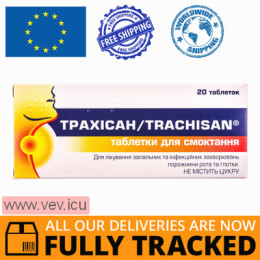
Trachisan 20 lozenges — Made in Germany — Free Delivery
Pharmacological propertiesTrachisan contains a combination of antimicrobial and local anesthetic agents.Tyrothricin is a mixture of various cyclic and linear (aliphatic) polypeptides that have an antibacterial effect. The mixture contains up to 70–80% tyrocidin, an alkaline cyclic decapeptide, and 2..
$24.19

Flexiderm cream 75g — Made in Poland — Free Delivery
Product descriptionFlexiderm softens and tones the epidermis, restores the water balance of the epidermal barrier and contributes to the reduction of transepidermal water loss (TEWL). The silymarin-phospholipid complex contains silymarin, which neutralizes free radicals and protects the epidermal ba..
$21.88

Protalis IVF 40 capules — Made in Italy — Free Delivery
Product descriptionProtalis IVF is designed to increase the effectiveness of IVF assisted reproductive technologies (IVF). Failures when trying IVF in 50% of cases are associated with the quality of the obtained gametes. In turn, the reason for the decrease in the quality of gametes is oxidative str..
$62.30
Buyers Online
- Customer from Brooklyn updated their account details
- Customer from Brooklyn logged in
- Customer from Strongsville logged in
- Customer from Brooklyn updated their account details
- Customer from Brooklyn placed a new order for VOLTAREN MAX GEL 180G - MADE IN SWITZERLAND - FREE SHIPPING
- Customer from Brooklyn logged in
- Customer placed a new order for DEBUTIR FORTE 60 СAPS — MADE IN POLAND- FREE SHIPPING
- Customer from Ottawa updated their account details
- Customer from Ottawa registered for an account
- Customer placed a new order for STRESAM 50MG 60 PILLS - MADE IN FRANCE - FREE SHIPPING
- Customer placed a new order for ACNE-DERM Cream 2p x 20Gr — Made in Poland by Uniapharm — Free Delivery
- Customer placed a new order for Ascorbic acid 0,05g 2p x 160 tablets — Made in Ukraine — Free Delivery
- Customer placed a new order for Fanigan 100 tablets — Made in India — Free Delivery
- Customer from Raleigh placed a new order for Essentiale Forte 300 mg, 2p x 50 capsules — Made in Poland — Free Delivery
- Customer from Raleigh logged in
- Customer placed a new order for TENOTEN FOR CHILDREN 40 PILLS — MADE IN LITHUANIA — FREE SHIPPING
- Customer from Raleigh logged in
- Customer placed a new order for Aqua Maris for Children from Birth nasal drops 10 ml — Made in Croatia — Free Deliver
- Customer from Raleigh logged in
- Customer from Raleigh placed a new order for Essentiale Forte 300 mg, 2p x 50 capsules — Made in Poland — Free Delivery