Valocordin oral drops 20ml — Made in Germany — Free Delivery
(Valocordin)


Availability: 5-10 Days

Free Shipping!
If your country is on the checkout list, we deliver to you.
US and the Rest of the World: 9 to 20 business days
Delivery Timeframes:
Europe: 7 to 18 business daysUS and the Rest of the World: 9 to 20 business days
Description Valocordin oral drops 20ml — Made in Germany — Free Delivery
Indication
Functional disorders of the cardiovascular system; neuroses accompanied by increased irritability and a sense of fear; psychosomatically caused anxiety; states of excitement with pronounced vegetative manifestations; sleep disturbance.
Application
It is prescribed for adults. used internally during meals with a small amount of liquid. the usual dose is 15-20 drops 3 times a day, with insomnia it can be increased to 30 drops. the duration of taking the preparation is determined by the doctor.
Contraindication
Hypersensitivity to active substances or to any component of the preparation, acute hepatic porphyria, severe liver and kidney dysfunction, diabetes, depression, myasthenia gravis. medicinal products containing phenobarbital are contraindicated in cases of alcoholism, preparation and preparation addiction (including history), respiratory diseases with shortness of breath, obstructive syndrome, severe arterial hypotension, acute myocardial infarction, depressive disorders with a patient's tendency to suicidal behavior .
Side effects
From the side of the nervous system: asthenia, weakness, impaired coordination of movements, nystagmus, ataxia, hallucinations, paradoxical excitement, insomnia (in elderly patients), decreased concentration of attention, fatigue, inhibition of reactions, headache, cognitive impairment. in some cases, drowsiness and light dizziness, confusion of consciousness may be noted.
On the part of the musculoskeletal system: with long-term use of preparations containing phenobarbital, there is a risk of osteogenesis disorders and the development of rickets. Decreased bone mineral density, osteopenia, osteoporosis, and fractures have been reported in patients receiving long-term phenobarbital therapy. The mechanism by which phenobarbital affects the metabolism of bone tissue has not been established.
Gastrointestinal tract: nausea, vomiting, constipation, heaviness in the epigastric region, with long-term use - impaired liver function.
From the hematopoietic organs: agranulocytosis, megaloblastic anemia, thrombocytopenia, anemia.
From the side of the cardiovascular system: a decrease in blood pressure, bradycardia.
Very rarely: allergic reactions, including angioedema, difficulty breathing, facial swelling, rash, itching.
Severe skin adverse reactions that have been registered with the use of phenobarbital: Stevens-Johnson syndrome and toxic epidermal necrolysis, urticaria, Lyell's syndrome, rhinitis, conjunctivitis, acne, purpura, lacrimation.
Special instructions
Life-threatening skin reactions in Stevens-Johnson syndrome and toxic epidermal necrolysis have been reported with phenobarbital.
Patients should be warned of signs and symptoms and closely monitored for skin reactions. The highest risk of developing Stevens-Johnson syndrome or toxic epidermal necrolysis is noted during the first weeks of treatment.
If symptoms of Stevens-Johnson syndrome or toxic epidermal necrolysis occur (eg progressive skin rash, often with blisters and mucosal damage), treatment should be discontinued.
The best results in the treatment of Stevens-Johnson syndrome or toxic epidermal necrolysis have been noted in the case of early diagnosis and immediate discontinuation of any preparation suspected of causing these symptoms.
If the patient developed Stevens-Johnson syndrome or toxic epidermal necrolysis when using Valocordin, these patients should not use the preparation in the future.
If the pain in the area of the heart does not go away after taking the preparation, you should consult a doctor to rule out acute coronary syndrome. It is prescribed with caution in hyperkinesis, hyperthyroidism, hypofunction of the adrenal glands, uncompensated heart failure, severe arterial hypotension and constant pain, acute preparation intoxication.
Valocordin contains 55 vol.% ethanol.
Long-term use of Valocordin is not recommended due to the risk of preparation addiction, possible accumulation of bromine in the body and the development of bromine poisoning.
Children. There is no experience of using the preparation in children.
The period of pregnancy and breastfeeding. During pregnancy and breastfeeding, taking the preparation is contraindicated.
The ability to influence the speed of reaction when driving a motor vehicle or working with other mechanisms. Valocordin reduces the reaction rate. Patients taking Valocordin should refrain from potentially dangerous activities that require increased attention and speed of psychomotor reactions.
Interactions
When using the preparation with other preparations that depress the central nervous system, mutual strengthening of the action (sedative-hypnotic effect) is possible, which may be accompanied by respiratory depression. alcohol enhances the effect of the preparation and can increase its toxicity.
Medicinal products containing valproic acid enhance the effect of barbiturates.
Phenobarbital induces liver enzymes and, accordingly, can accelerate the metabolism of some preparations that are metabolized by liver enzymes (for example, coumarin derivatives, antibiotics, and sulfonamides). Phenobarbital enhances the effect of analgesics, anesthetics, anesthetics, neuroleptics, tranquilizers; reduces the effect of paracetamol, indirect anticoagulants, metronidazole, tricyclic antidepressants, salicylates, digitoxin.
Possible influence on the blood concentration of phenytoin, as well as carbamazepine and clonazepam. MAO inhibitors prolong the effect of phenobarbital. Rifampicin may reduce the effect of phenobarbital. When used with gold preparations, the risk of kidney damage increases. With long-term simultaneous use with non-steroidal anti-inflammatory preparations, there is a risk of stomach ulcers and bleeding. The simultaneous use of preparations containing phenobarbital with zidovudine increases the toxicity of both preparations. The interaction of Valocordin (containing phenobarbital) with lamotrigine, thyroid hormones, doxycycline, chloramphenicol, antifungal preparations (azole group), griseofulvin, GCS, oral contraceptives is undesirable due to the possible weakening of the action of these preparations.
Increases the toxicity of methotrexate.
Overdose
Symptoms acute (from mild to moderate) poisoning with barbiturates: dizziness, fatigue, deep sleep from which the patient cannot be awakened.
Hypersensitivity reactions may occur: angioedema, urticaria, itching, rash.
Acute severe poisoning: deep coma accompanied by tissue hypoxia, shallow breathing, first accelerated and then slowed down, increased heart rate, arrhythmia, hypotension, bradycardia, vascular collapse, reduction or loss of reflexes, nystagmus, headache, nausea, weakness, heart failure activity, a decrease in body temperature, a decrease in heart rate, a decrease in diuresis.
Failure to provide timely medical assistance may result in death as a result of vascular insufficiency, respiratory paralysis, or pulmonary edema.
Long-term use of preparations containing bromine can lead to bromine poisoning, which is characterized by the following symptoms: confusion, ataxia, apathy, depressed mood, conjunctivitis, colds, acne or purpura.
Treatment. Cases of acute valocordin poisoning should be treated in the same way as poisoning with other hypnotics and barbiturates, depending on the severity of the symptoms of poisoning. The patient must be hospitalized in the intensive care unit. Breathing and blood circulation require stabilization. Respiratory failure requires artificial respiration, shock is stopped by the administration of plasma and plasma substitutes. If a lot of time has passed after taking the preparation, it is necessary to wash the stomach (inject 10 g of activated carbon powder and sodium sulfate into the stomach). In order to quickly remove barbiturates from the body, it is possible to perform forced diuresis with alkalis, as well as hemodialysis and / or hemoperfusion.
Treatment of bromine poisoning: the removal of bromine ions from the body can be accelerated by the introduction of a significant amount of table salt solution with the simultaneous introduction of saluretic agents.
In the event of hypersensitivity reactions, prescribe desensitizing preparations.
Storage conditions
In the original packaging at a temperature not higher than 25 °C.
Tags: Valocordin
Products viewed
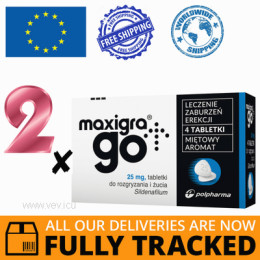
2 x MAXIGRA GO 25MG 4 TABS — MADE IN POLAND — FREE SHIPPING
Maxigra Go 25mg 4 tablets.It contains sildenafil - the most popular substance for erectile dysfunction.Available over the counter in packs of 2 or 4 tablets.Composition and form:Each chewable tablet contains 25 mg of sildenafil formed in situ with 35.12 mg of sildenafil citrate. Excipients with know..
$31.34
Buyers Online
- Customer from Brooklyn updated their account details
- Customer from Brooklyn logged in
- Customer from Strongsville logged in
- Customer from Brooklyn updated their account details
- Customer from Brooklyn placed a new order for VOLTAREN MAX GEL 180G - MADE IN SWITZERLAND - FREE SHIPPING
- Customer from Brooklyn logged in
- Customer placed a new order for DEBUTIR FORTE 60 СAPS — MADE IN POLAND- FREE SHIPPING
- Customer from Ottawa updated their account details
- Customer from Ottawa registered for an account
- Customer placed a new order for STRESAM 50MG 60 PILLS - MADE IN FRANCE - FREE SHIPPING
- Customer placed a new order for ACNE-DERM Cream 2p x 20Gr — Made in Poland by Uniapharm — Free Delivery
- Customer placed a new order for Ascorbic acid 0,05g 2p x 160 tablets — Made in Ukraine — Free Delivery
- Customer placed a new order for Fanigan 100 tablets — Made in India — Free Delivery
- Customer from Raleigh placed a new order for Essentiale Forte 300 mg, 2p x 50 capsules — Made in Poland — Free Delivery
- Customer from Raleigh logged in
- Customer placed a new order for TENOTEN FOR CHILDREN 40 PILLS — MADE IN LITHUANIA — FREE SHIPPING
- Customer from Raleigh logged in
- Customer placed a new order for Aqua Maris for Children from Birth nasal drops 10 ml — Made in Croatia — Free Deliver
- Customer from Raleigh logged in
- Customer from Raleigh placed a new order for Essentiale Forte 300 mg, 2p x 50 capsules — Made in Poland — Free Delivery