Lidocain solution for injection 2%, 2ml x 10 ampoules — Made in Hungary — Free Delivery


US and the Rest of the World: 9 to 20 business days
Description Lidocain solution for injection 2%, 2ml x 10 ampoules — Made in Hungary — Free Delivery
Product description
Solution for injection Lidocaine is indicated for local anesthesia (terminal, infiltration, conduction) in surgery, ophthalmology, dentistry, otorhinolaryngology; blockade of peripheral nerves and nerve plexuses for various pain syndromes.
Compound
Active substance: lidocaine;
1 ampoule (2 ml) of solution contains anhydrous lidocaine hydrochloride (in the form of lidocaine hydrochloride monohydrate) 40 mg;
Excipients: sodium chloride, water for injection.
Contraindications
- individual hypersensitivity to the components of the preparation, as well as to other amide local anesthetic preparations;
- a history of epileptoform convulsions associated with the administration of lidocaine hydrochloride;
- AV block II and III degree, complete transverse heart block;
- sick sinus syndrome;
- Wolff-Parkinson-White syndrome, Adams-Stokes syndrome;
- severe forms of heart failure (II-III degree);
- severe arterial hypotension;
- severe bradycardia;
- cardiogenic shock;
- complete transverse heart block;
- myasthenia gravis; hypovolemia; porphyria;
- severe renal and / or hepatic impairment;
- retrobulbar administration to patients with glaucoma;
- blood clotting disorders, anticoagulant therapy;
- infection at the injection site;
- non-contact patients.
Mode of application
Before using lidocaine hydrochloride, it is necessary to conduct a skin test for hypersensitivity to the preparation, as evidenced by edema and redness of the injection site.
For local anesthesia, apply by injection (subcutaneously, intramuscularly) and topically on the mucous membranes. Intravascular administration of the preparation should be avoided.
Application features
Pregnant
Contraindicated.
Children
The preparation is not used in children under 12 years of age.
Drivers
After using the preparation, one should not engage in activities that require the speed of psychomotor reactions.
Overdose
The main symptoms are associated with depression of the central nervous system and the cardiovascular system: general weakness, drowsiness, depression, dizziness, disorientation, tonic-clonic seizures, coma, tremors, visual disturbances, ringing in the ears, atrioventricular block, asphyxia, nausea, vomiting, euphoria, psychomotor agitation, asthenia, apnea, bradycardia, decreased blood pressure, collapse. The first symptoms of an overdose in healthy people occur when the concentration of lidocaine hydrochloride in the blood is over 0.006 mg / kg; convulsions - at 0.01 mg / kg.
Treatment: discontinuation of preparation administration, oxygen therapy, vasoconstrictors (norepinephrine, mezaton), anticonvulsants, anticholinergics. The patient should be in a horizontal position; it is necessary to provide access to fresh air, oxygen supply and / or artificial respiration. Treat central nervous system symptoms with benzodiazepines or short-acting barbiturates. If an overdose occurs during anesthesia, a short-acting muscle relaxant should be used. To correct bradycardia and conduction disorders, use atropine (0.5-1 mg intravenously), with arterial hypotension - sympathomimetics in combination with β-adrenergic receptor agonists. In case of cardiac arrest, immediate resuscitation is indicated. It is possible to carry out intubation, artificial ventilation of the lungs. In the acute phase of lidocaine overdose, dialysis is ineffective. There is no specific antidote.
Side effects
on the part of the cardiovascular system: lowering blood pressure, tachycardia - when administered with a vasoconstrictor, bradycardia, peripheral vasodilation, collapse, tachycardia, palpitations, chest pain, heart pain, arrhythmia, slowing heart conduction, transverse heart block, fibrillation ventricular failure, cardiac arrest; very rarely - arterial hypertension;
from the central and peripheral nervous system: excitation of the central nervous system (when used in high doses), anxiety, dizziness, confusion, drowsiness, sleep disturbance, headache, weakness, restlessness, euphoria, nystagmus, loss of consciousness, impaired sensitivity, paresthesia, numbness of the tongue and lips (when used in dentistry); in patients with hypersensitivity - euphoria, tremor, trismus, muscle twitching, motor restlessness, convulsions (the risk of their development increases against the background of hypercapnia and acidosis); persistent anesthesia, paresis or elegy of the lower extremities and loss of sphincter control (for example, cauda equina syndrome) - causes more often other local anesthetics, motor and sensory block, dysarthria, dysphagia, coma;
on the part of the organs of vision: visual impairment, blurred vision, diplopia, nystagmus, flashing "flies" before the eyes, dilated pupils, photophobia, reversible blindness, conjunctivitis;
mental disorders: anorexia, irritability, restlessness, hallucinations, depression, anxiety, sleep disturbances, a state of agitation;
from the respiratory system, chest and mediastinal organs: rhinitis, shortness of breath, shortness of breath, a feeling of suffocation, respiratory depression, bronchospasm, respiratory muscle paralysis, respiratory paralysis (often develops with subarachnoid anesthesia), respiratory arrest;
from the digestive tract: nausea, vomiting, involuntary defecation, abdominal pain;
from the urinary system: involuntary urination;
on the part of the skin and subcutaneous tissue: hyperemia, itching, rash, urticaria;
from the reproductive system: decreased libido and / or potency;
from the immune system: hypersensitivity reactions, including angioedema, generalized exfoliative dermatitis, anaphylactic shock, anaphylactic reactions, suppression of the immune system.
Interaction
Chlorpromazine, pethidine, bupivacaine, quinidine, disopyramide, amitriptyline, imipramine, nortriptyline - when combined with lidocaine, the concentration of the latter in the blood plasma decreases.
Anticonvulsants, barbiturates (phenytoin) - when combined with lidocaine, it is possible to accelerate the metabolism of lidocaine in the liver, decrease the concentration in the blood, and increase the cardiodepressant effect.
Izadrin, glucagon - when combined with lidocaine, the clearance of lidocaine increases.
Norepinephrine, mexiletine - when combined with lidocaine, the clearance of the latter decreases (toxicity increases); hepatic blood flow decreases.
Acetazolamide, thiazide and loop diuretics - when combined with lidocaine, as a result of the creation of hypokalemia, reduce the effect of the latter.
Storage conditions
Store at a temperature not exceeding 25 ° C, out of the reach of children.
The shelf life is 5 years.
Tags: Lidocain
Products viewed
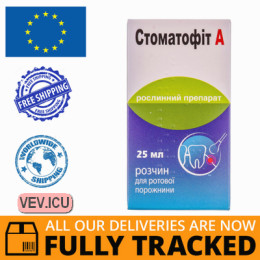
Stomatophyte A solution for oral cavity 25 ml — Made in Poland — Free Delivery
IndicationLocal treatment of inflammatory diseases of the mucous membrane of the oral cavity and periodontal tissues - gingivitis, periodontitis, stomatitis, glossitis (including those caused by yeast fungi).ApplicationStomatophyte. used in the form of rinses in adults and children over 6 years old...
$21.99

ARTELAC SPLASH EYE DROPS 10ML - MADE IN USA - FREE SHIPPING
Product descriptionArtelak Splash eye drops - is a natural moisturizer with a high ability to bind to water.The hyaluronic acid (sodium hyaluronate) included in the Artelak Splash.The lacrimal fluid consists of three layers that provide the surface of the eye with nutrients, form a protective l..
$26.50
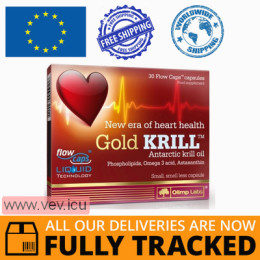
Olimp Gold Krill, 30 capsules — Made in Poland — Free Delivery
Product descriptionGold Krill is a dietary supplement containing high-quality Antarctic Krill oil from Euphausia superba, rich in essential omega-3 unsaturated fatty acids, phospholipids and astaxanthin. The contained eicosapentaenoic acid (EPA) and docosahexaenoic acid (DHA) contribute to the prope..
$28.81
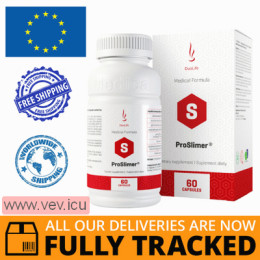
Duolife ProSlimer, 60 capsules — Made in Poland — Free Delivery
Product descriptionThe ProSlimer dietary supplement contains the proprietary formula of citrus fruits and guarana - ProSlimer and plant extracts. The hydroxycitric acid contained in the Garcinia cambogia fruit extract inhibits lipogenesis and accelerates fat burning. Green coffee extract, thanks to ..
$47.29
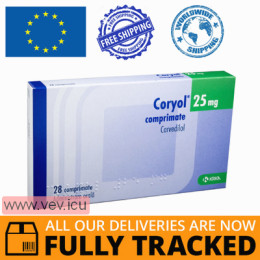
Coryol 25 mg 28 tablets — Made in Slovenia — Free Delivery
Pharmacological propertiesPharmacodynamics. Carvedilol is a non-selective β-adrenergic receptor blocker with a vasodilating effect. it also has antioxidant and antiproliferative properties.The active ingredient carvedilol is a racemate; enantiomers differ in effects and metabolism. The S (-) - enant..
$31.12
Buyers Online
- Customer from Brooklyn updated their account details
- Customer from Brooklyn logged in
- Customer from Strongsville logged in
- Customer from Brooklyn updated their account details
- Customer from Brooklyn placed a new order for VOLTAREN MAX GEL 180G - MADE IN SWITZERLAND - FREE SHIPPING
- Customer from Brooklyn logged in
- Customer placed a new order for DEBUTIR FORTE 60 СAPS — MADE IN POLAND- FREE SHIPPING
- Customer from Ottawa updated their account details
- Customer from Ottawa registered for an account
- Customer placed a new order for STRESAM 50MG 60 PILLS - MADE IN FRANCE - FREE SHIPPING
- Customer placed a new order for ACNE-DERM Cream 2p x 20Gr — Made in Poland by Uniapharm — Free Delivery
- Customer placed a new order for Ascorbic acid 0,05g 2p x 160 tablets — Made in Ukraine — Free Delivery
- Customer placed a new order for Fanigan 100 tablets — Made in India — Free Delivery
- Customer from Raleigh placed a new order for Essentiale Forte 300 mg, 2p x 50 capsules — Made in Poland — Free Delivery
- Customer from Raleigh logged in
- Customer placed a new order for TENOTEN FOR CHILDREN 40 PILLS — MADE IN LITHUANIA — FREE SHIPPING
- Customer from Raleigh logged in
- Customer placed a new order for Aqua Maris for Children from Birth nasal drops 10 ml — Made in Croatia — Free Deliver
- Customer from Raleigh logged in
- Customer from Raleigh placed a new order for Essentiale Forte 300 mg, 2p x 50 capsules — Made in Poland — Free Delivery