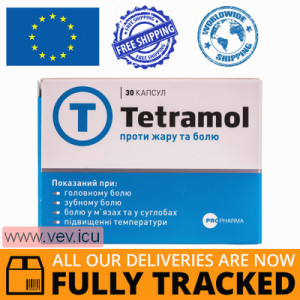
Tetramol 30 capsules — Made in Latvia — Free Delivery


US and the Rest of the World: 9 to 20 business days
Description Tetramol 30 capsules — Made in Latvia — Free Delivery
Pharmacological properties
Pharmacodynamics. A combined preparation, the action of which is due to the components that make up its composition. The preparation has an analgesic (pain relieving), anti-inflammatory, antipyretic effect. inhibits the synthesis of prostaglandins. reduces the severity of joint pain at rest and during movement, reduces morning stiffness and swelling of the joints, increases the range of motion.
Caffeine enhances the analgesic effect of ibuprofen and paracetamol, increases efficiency, reduces fatigue and drowsiness.
Pharmacokinetics. Paracetamol is rapidly and almost completely absorbed in the gastrointestinal tract. Cmax in blood plasma is reached within 30-60 minutes after administration, and T½ is 1-4 hours after the application of therapeutic doses. In the case of severe hepatic insufficiency, it increases up to 5 hours. In renal insufficiency, T½ does not increase, however, since excretion by the kidneys is limited, the dose of paracetamol must be reduced.
Paracetamol passes through the BBB, as well as into breast milk.
Ibuprofen is rapidly absorbed in the digestive tract after administration. Cmax in blood plasma is reached 45 minutes after ingestion, in synovial fluid - 3 hours after ingestion. Ibuprofen is metabolized in the liver, excreted by the kidneys unchanged and as metabolites. T½ - about 2 hours.
After oral administration, caffeine is rapidly absorbed. Cmax in blood plasma is reached after about 20-60 minutes, T1 / 2 - about 4 hours.
Indications
Pain syndrome of varying intensity: dysmenorrhea and menstrual pain; headache; neuralgia; myalgia; arthralgia; toothache. increased body temperature (fever with flu and colds). as part of the complex treatment of postoperative pain, reducing the severity of symptoms of rheumatoid arthritis and osteoarthritis.
Application
Adults and adolescents over the age of 16 take 1-2 capsules every 4-6 hours, depending on the intensity of the pain syndrome and the doctor's recommendation. the daily dose should not exceed 6 capsules. children aged 12 to 16 years: 1 capsule 1-2 times a day. the capsule should be taken without chewing with a sufficient amount of liquid (a glass of water). the duration of treatment is usually 3–7 days. if there is no improvement during this time, treatment should be reviewed.
The maximum period of use in children without consulting a doctor is 3 days. The interval between doses is at least 4 hours. Do not exceed the recommended dose.
Contraindications
Hypersensitivity to paracetamol, ibuprofen, caffeine or any other component of the preparation, stomach ulcer, including a history of (2 or more distinct episodes of exacerbation of gastrointestinal ulcers or bleeding), bleeding in the upper digestive tract or a breakthrough in the history associated with the previous NSAID treatment; acute pancreatitis, severe liver and / or kidney dysfunction, congenital hyperbilirubinemia, glucose-6-phosphate dehydrogenase deficiency, alcoholism, blood diseases, severe anemia, leukopenia, thrombosis, thrombophlebitis, in conditions of increased excitement; sleep disturbance; severe ag; organic diseases of the cardiovascular system; glaucoma; epilepsy, hyperthyroidism, decompensated heart failure, cardiac conduction disorders, severe atherosclerosis, tendency to vasospasm, coronary heart disease, prostatic hypertrophy, severe diabetes mellitus, allergic reaction (eg, ba, rhinitis, quincke edema) after the use of acetylsalicylic acid or other np , the use of the preparation simultaneously with NSAIDs, advanced age.
Do not use simultaneously with MAO, COX-2 inhibitors and within 2 weeks after stopping their use; contraindicated in patients taking tricyclic antidepressants or β-adrenergic receptor blockers. Gilbert's syndrome. Age up to 12 years.
Side effects
The following adverse reactions to the preparation are categorized according to meddra terminology.
General disorders: hypersensitivity in the form of urticaria and itching; severe hypersensitivity reactions with such manifestations: swelling of the face, tongue and larynx, shortness of breath, tachycardia, arrhythmia, decrease or increase in blood pressure, anaphylaxis, Quincke's edema, hepatorenal syndrome, exacerbation of asthma and bronchospasm.
From the blood and lymphatic system: hematopoiesis disorders, agranulocytosis, anemia (including hemolytic and aplastic), decreased hematocrit and hemoglobin levels, sulfhemoglobinemia and methemoglobinemia (cyanosis, shortness of breath, heart pain), leukopenia, neutropenia, pancytopenia, thrombocytopenia. The first signs are: high fever, sore throat, mouth ulcers, flu symptoms, severe exhaustion, unexplained bleeding and bruising.
Gastrointestinal disorders: abdominal pain, heartburn, ulcerative stomatitis, dyspepsia and nausea; diarrhea, flatulence, constipation and vomiting, pancreatitis, duodenitis, esophagitis; peptic ulcer, perforation or gastrointestinal bleeding, which can in some cases be fatal, especially in the elderly; exacerbation of ulcerative colitis and Crohn's disease.
From the urinary system: acute renal failure; renal colic; papillonecrosis, especially with prolonged use, is associated with an increased content of urea in the blood plasma, and edema; cystitis; hematuria; interstitial nephritis; nephrotic syndrome; oliguria; polyuria; tubular necrosis, glomerulonephritis; aseptic pyuria.
Neurological disorders: headache, dizziness, irritability, nervousness, depression, drowsiness, insomnia, anxiety, psychomotor agitation, emotional instability, convulsions; aseptic meningitis.
From the senses: hearing impairment, hearing loss, ringing or tinnitus, blurred vision, changes in color perception, toxic amblyopia.
From the respiratory system: bronchospasm in patients sensitive to aspirin and other NSAIDs.
From the endocrine system and metabolism: hypoglycemia, up to hypoglycemic coma; decreased appetite; dryness of the mucous membranes of the eyes and mouth; rhinitis.
From the digestive system: liver disorders; increased activity of liver enzymes, usually without the development of jaundice; hepatonecrosis (dose-dependent effect), liver failure.
On the part of the immune system: in patients with autoimmune disorders (systemic lupus erythematosus, systemic connective tissue disease) during treatment with ibuprofen, isolated cases of symptoms of aseptic meningitis were observed, namely: stiff neck, headache, nausea, vomiting, fever, and disorientation.
On the part of the skin and subcutaneous tissues: allergic skin reactions, rash, purpura, peeling of the skin, itching, alopecia, photosensitivity; angioedema, severe skin reactions such as erythema polymorphism (including Stevens-Johnson syndrome) and epidermal necrolysis.
Simultaneous administration of the preparation in recommended doses with products containing caffeine can increase the side effects caused by caffeine, such as:
mental disorders: headache, dizziness, increased excitability, anxiety, irritability, heart palpitations, anxiety, insomnia due to stimulation of the central nervous system;
from the gastrointestinal tract: nausea caused by irritation of the gastrointestinal tract.
Special instructions
In patients with impaired liver function, as well as in those who take paracetamol for a long time, it is recommended to regularly perform liver function tests. if the patient is using warfarin or similar preparations that have an anticoagulant effect, consult a doctor before using the preparation. patients who take daily analgesics for mild arthritis should consult a doctor before using the preparation. in patients with severe infections such as sepsis, which are accompanied by a decrease in glutathione levels, the risk of metabolic acidosis may be increased when taking paracetamol. the symptoms of metabolic acidosis are deep, rapid or labored breathing, nausea, vomiting, and loss of appetite. you should immediately consult a doctor if these symptoms appear. with the simultaneous use of oral anticoagulants and high doses of paracetamol, it is recommended to determine the prothrombin time. during treatment, alcohol should be avoided. patients should be warned not to use other preparations containing paracetamol at the same time.
Taking paracetamol can affect the results of laboratory tests of the level of uric acid and glucose in the blood.
In case of impaired liver and kidney function, the preparation should be used only as directed by a doctor.
In high doses (exceeding 6 g per day), paracetamol is toxic to the liver. However, a negative effect on the liver can also occur at significantly lower doses in the case of alcohol consumption, the use of liver enzyme inducers or other substances that have a toxic effect on the liver.
Care should be taken (after consulting a doctor) to start using the preparation in patients who have had high blood pressure, fluid retention and edema during the treatment of NSAIDs.
Side effects can be reduced by short-term use of the minimum effective dose necessary to treat symptoms.
Influence on the cardiovascular and cerebrovascular system. Clinical studies and epidemiological data indicate that the use of ibuprofen, especially in high doses (2400 mg daily), as well as prolonged use, can lead to arterial thrombotic complications (myocardial infarction or stroke). In general, data from epidemiological studies do not indicate that a low dose of ibuprofen (below 1200 mg daily) increases the risk of developing myocardial infarction.
Bronchospasm can occur in patients with asthma, with current allergic diseases, or a history of bronchospasm.
Systemic lupus erythematosus and systemic connective tissue diseases are associated with an increased risk of aseptic meningitis.
Chronic inflammatory bowel disease (ulcerative colitis, Crohn's disease) can be exacerbated.
Symptoms of increased blood pressure and / or heart failure due to severe liver dysfunction may worsen and / or fluid retention may occur.
Symptoms of kidney failure due to severe renal impairment may worsen.
The preparation should be used with caution in patients receiving concomitant therapy with preparations that increase the risk of peptic ulcer disease or bleeding, in particular oral corticosteroids, anticoagulants such as warfarin, selective serotonin reuptake inhibitors or antiplatelet agents such as acetylsalicylic acid. If necessary, combination therapy with protective preparations (misoprostol or proton pump inhibitors) should be carried out, especially in patients who need long-term use of low doses of acetylsalicylic acid.
Liver disease increases the risk of liver damage from paracetamol. The risk of overdose is higher in patients with non-cirrhotic alcoholic liver disease.
Serious skin reactions, including exfoliative dermatitis, Stevens-Johnson syndrome, and toxic epidermal necrolysis, are very rare in association with the use of NSAIDs. There is a high risk of these reactions at the beginning of the course of treatment, with the first manifestations appearing in most cases within the first month of treatment.
With long-term use of pain relievers in high doses, headache may occur, which cannot be treated by increasing the dose of the preparation. Prolonged and uncontrolled use of pain relievers can lead to chronic kidney damage with the risk of renal failure (analginic nephropathy).
There is insufficient evidence that preparations that inhibit the synthesis of COX / prostaglandins can impair reproductive function in women by interfering with the ovulation process. This phenomenon is reversible after stopping treatment.
With all NSAIDs, gastrointestinal bleeding, ulceration, or perforation may occur, which can be fatal, with or without a history of worsening symptoms or a history of serious cardiovascular events.
Patients who have had gastrointestinal disturbances should report any unusual abdominal symptoms (especially gastrointestinal bleeding) at the start of treatment.
One capsule of the preparation contains approximately the same dose of caffeine as in a cup of coffee. When using Tetramol, it is necessary to limit the intake of medicines, food and drinks containing caffeine, since large amounts of caffeine can cause nervousness, irritability, insomnia, and sometimes heart palpitations.
Before using the preparation, you should consult your doctor.
If symptoms persist, you should see a doctor.
Do not take this medicine at the same time as other products containing paracetamol, ibuprofen or caffeine.
Use during pregnancy and lactation. Do not use during pregnancy and lactation.
Children. Do not use the preparation in children under 12 years of age.
The ability to influence the reaction rate when driving or working with other mechanisms. In cases where adverse reactions from the nervous system are observed during treatment, you should refrain from driving and working with mechanisms.
Interactions
With the simultaneous use of paracetamol with metoclopramide and domperidone, it is possible to increase the absorption of paracetamol, with colesterolamine - a decrease in absorption.
In the case of long-term constant use, paracetamol can enhance the anticoagulant effect of warfarin and other coumarins, increasing the risk of bleeding.
NSAIDs can increase the effect of anticoagulants such as warfarin and weaken the effect of blood pressure lowering preparations or diuretics.
Concomitant use of other NSAIDs increases the risk of side effects.
Corticosteroids: Increase the risk of gastrointestinal side effects.
Taking the preparation can cause an increase in the concentration of lithium in the blood plasma.
Simultaneous use with methotrexate can lead to poisoning.
Barbiturates reduce the antipyretic effect of paracetamol.
Anticonvulsants (including phenytoin, barbiturates, carbamazepine), which stimulate the activity of liver microsomal enzymes, can increase the toxic effect of paracetamol on the liver due to an increase in the degree of conversion of the preparation into hepatotoxic metabolites. With the simultaneous use of paracetamol with hepatotoxic agents, the toxic effect of preparations on the liver increases. The simultaneous use of high doses of paracetamol with isoniazid increases the risk of developing hepatotoxic syndrome. Paracetamol reduces the effectiveness of diuretics. Do not use concomitantly with alcohol.
The simultaneous use of caffeine with MAO inhibitors can cause a dangerous increase in blood pressure. Caffeine enhances the effect (improves bioavailability) of analgesics-antipyretics, potentiates the effects of xanthine derivatives, alpha- and beta-adrenergic agonists, psychostimulants.
Cimetidine, hormonal contraceptives, isoniazid enhance the effects of caffeine. Caffeine reduces the effect of opioid analgesics, anxiolytics, hypnotics and sedatives, is an antagonist of preparations for anesthesia and other preparations that depress the central nervous system, a competitive antagonist of preparations adenosine, ATP. With the simultaneous use of caffeine with ergotamine, the absorption of ergotamine in the gastrointestinal tract improves, with thyroid-stimulating agents - the thyroid effect increases. Caffeine lowers the concentration of lithium in the blood.
Should not be used in combination with:
acetylsalicylic acid, if a low dose of acetylsalicylic acid (not higher than 75 mg / day) has not been prescribed by a doctor, as this can lead to side effects;
other NSAIDs, as this can lead to an increased incidence of side effects.
Ibuprofen should be used with caution in combination with:
antihypertensive and diuretic preparations: NSAIDs can reduce the therapeutic effect of these preparations.
Diuretics increase the risk of nephrotoxicity.
Anticoagulants: NSAIDs can increase the healing effect of anticoagulants such as warfarin.
Antiplatelet and selective serotonin inhibitors: increased risk of gastrointestinal bleeding.
Cardiac glycosides: May exacerbate heart failure, decrease glomerular filtration rate, and increase plasma glycoside levels.
Cyclosporins: There is some evidence of possible preparation interactions that increase the risk of nephrotoxicity.
Mifepristone: Do not take NSAIDs for 8-12 days after using mifepristone, as this may reduce the effect of mifepristone.
Tacrolimus: increased risk of nephrotoxicity.
Lithium and methotrexate: There is evidence of a potential increase in plasma levels of lithium and methotrexate.
Zidovudine: There is evidence of an increased risk of hemarthrosis and hematoma in HIV-infected patients who are using concomitant treatment with zidovudine and ibuprofen.
Quinolone antibiotics: concomitant use increases the risk of seizures.
Overdose
With prolonged use of high doses, aplastic anemia, thrombocytopenia, pancytopenia, agranulocytosis, neutropenia, and leukopenia are possible. when high doses are taken, disorders of the central nervous system may occur (dizziness, psychomotor agitation, disorientation and attention disorder, insomnia, tremor, nervousness, anxiety), from the urinary system - nephrotoxicity (renal colic, interstitial nephritis, papillary necrosis).
In case of an overdose, there may be increased sweating, psychomotor agitation or depression of the central nervous system, drowsiness, impaired consciousness, cardiac arrhythmias, tachycardia, extrasystole, tremor, hyperreflexia, convulsions.
Symptoms of a paracetamol overdose. Liver damage is possible in adults who have taken 10 g or more of paracetamol and in children who have taken more than 150 mg / kg of body weight. In patients with risk factors (long-term use of carbamazepine, phenobarbital, phenytoin, primidone, rifampicin, St. John's wort or other preparations that induce liver enzymes, alcohol abuse, glutathione system deficiency, for example, digestive disorders, HIV infection, fasting, cystic fibrosis, cachexia) 5 g or more of paracetamol can lead to liver damage. In the first 24 hours: pallor, nausea, vomiting, anorexia and abdominal pain, hepatonecrosis, increased activity of hepatic transaminases, increased prothrombin index. Liver damage may become apparent 12–48 hours after taking excessive doses of the preparation. Disorders of glucose metabolism and metabolic acidosis may occur. In severe poisoning, liver failure can progress to encephalopathy, coma, to death. ARF with acute tubular necrosis may develop even in the absence of severe renal impairment. Cardiac arrhythmia and pancreatitis were also noted.
Treatment. In case of an overdose, emergency medical attention is needed, even if there are no symptoms of an overdose. Symptoms may be limited to nausea and vomiting, or may not reflect the severity of the overdose or the risk of organ damage. Treatment with activated charcoal should be considered if an excessive dose of paracetamol was taken within 1 hour. The plasma concentration of paracetamol should be measured 4 hours and later after administration (earlier concentrations are unreliable). Treatment with N-acetylcysteine can be applied within 24 hours after taking paracetamol, but the maximum protective effect occurs when it is used within 8 hours after administration. The effectiveness of the antidote decreases sharply after this time. If necessary, the patient should be administered IV N-acetylcysteine according to current recommendations. In the absence of vomiting, oral methionine can be used as an appropriate alternative in remote areas outside the hospital.
Symptoms of a caffeine overdose. High doses of caffeine can cause rapid breathing, extrasystole, dizziness, a state of passion, epigastric pain, vomiting, diuresis, tachycardia or cardiac arrhythmia, stimulation of the central nervous system (insomnia, anxiety, agitation, anxiety, syndrome of increased neuro-reflex excitability, headache, tremor, convulsions, nervousness and irritability). Clinically significant symptoms of caffeine overdose are also associated with liver damage with paracetamol.
Treatment. There is no specific antidote. But supportive measures, such as beta-adrenergic antagonists, can reduce the cardiotoxic effects.
Symptoms of ibuprofen intoxication. In most patients who participated in clinical trials, the use of a significant amount of NSAIDs caused only nausea, vomiting, epigastric pain, or very rarely diarrhea. Tinnitus, headache, and bleeding from the digestive tract may occur. In more severe poisoning, toxic damage to the central nervous system may occur in the form of drowsiness, sometimes - nervous agitation and disorientation or coma. Sometimes patients have seizures. In severe poisoning, metabolic acidosis may occur; the prothrombin index may be elevated, possibly due to the effect on blood coagulation factors. AKI and liver damage may occur. Patients with asthma may experience an exacerbation of the course of the disease. The use of more than 400 mg / kg in children may cause symptoms of intoxication. In adults, the effects are less pronounced. The half-life in overdose is 1.5-3 hours.
Treatment can be symptomatic and supportive, and may include clearing the airways and monitoring cardiac symptoms and vital signs until the condition returns to normal. Oral administration of activated charcoal is recommended within 1 hour after the application of a potentially toxic amount of the preparation. For frequent or prolonged seizures, diazepam or lorazepam IV should be used. Bronchodilators should be used to treat asthma.
Storage conditions
In the original packaging at a temperature not exceeding 25 ° C, out of the reach of children.
Tags: Tetramol
Products viewed

2 x APOD3 DROPS 400J.M. 10ML - MADE IN CANADA - FREE SHIPPING
Product descriptionVitamin D helps maintain healthy bones and teeth and supports the proper functioning of the immune system and musclesApplicationSupplementing the diet with active ingredients of the preparation.Recommended intakeNewborns and infants: 1 actuation (fully) of the dosing pump daily or..
$19.57
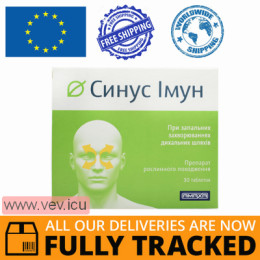
Sinus Immun 450 mg, 30 tablets — Made in Poland — Free Delivery
Product descriptionSinus Immun has a complex effect on the upper respiratory tract, which is manifested by immunomodulatory, antiviral, antibacterial, secretolytic, anti-inflammatory and anti-edema effects. Vitamins in the Sinus Imun complex additionally contribute to the maintenance of the healthy ..
$20.72
Buyers Online
- Customer from Brooklyn updated their account details
- Customer from Brooklyn logged in
- Customer from Strongsville logged in
- Customer from Brooklyn updated their account details
- Customer from Brooklyn placed a new order for VOLTAREN MAX GEL 180G - MADE IN SWITZERLAND - FREE SHIPPING
- Customer from Brooklyn logged in
- Customer placed a new order for DEBUTIR FORTE 60 СAPS — MADE IN POLAND- FREE SHIPPING
- Customer from Ottawa updated their account details
- Customer from Ottawa registered for an account
- Customer placed a new order for STRESAM 50MG 60 PILLS - MADE IN FRANCE - FREE SHIPPING
- Customer placed a new order for ACNE-DERM Cream 2p x 20Gr — Made in Poland by Uniapharm — Free Delivery
- Customer placed a new order for Ascorbic acid 0,05g 2p x 160 tablets — Made in Ukraine — Free Delivery
- Customer placed a new order for Fanigan 100 tablets — Made in India — Free Delivery
- Customer from Raleigh placed a new order for Essentiale Forte 300 mg, 2p x 50 capsules — Made in Poland — Free Delivery
- Customer from Raleigh logged in
- Customer placed a new order for TENOTEN FOR CHILDREN 40 PILLS — MADE IN LITHUANIA — FREE SHIPPING
- Customer from Raleigh logged in
- Customer placed a new order for Aqua Maris for Children from Birth nasal drops 10 ml — Made in Croatia — Free Deliver
- Customer from Raleigh logged in
- Customer from Raleigh placed a new order for Essentiale Forte 300 mg, 2p x 50 capsules — Made in Poland — Free Delivery