Zerkalin cutaneous solution 1% 30ml — Made in Croatia — Free Delivery
(Zerkalin )


Availability: In Stock

Free Shipping!
If your country is on the checkout list, we deliver to you.
US and the Rest of the World: 9 to 20 business days
Delivery Timeframes:
Europe: 7 to 18 business daysUS and the Rest of the World: 9 to 20 business days
Description Zerkalin cutaneous solution 1% 30ml — Made in Croatia — Free Delivery
Pharmacological properties.
Pharmacodynamics.
Clindamycin is a semi-synthetic derivative of lincomycin, an antibiotic obtained from a culture of Streptomyces lincolensis. It has bacteriostatic and bactericidal properties, depending on the concentration at the site of action and the sensitivity of microorganisms. Clindamycin inhibits protein synthesis in susceptible bacteria by binding to the 50S subunit of bacterial ribosomes, interrupting the early stages of protein synthesis. It is known that the spectrum of action of clindamycin in vitro and in vivo covers the majority of gram-positive bacteria, interrupting the early stages of protein synthesis. It is known that the spectrum of action of clindamycin in vitro and in vivo covers the majority of gram-positive bacteria, most anaerobic pathogens and protozoa. The preparation is ineffective against Enterobacteriaceae, fungi and viruses. After topical application to the skin of a 1% solution of clindamycin hydrochloride, the growth of sensitive bacteria, especially the anaerobes Propionibacterium acnes, which are in the sebaceous glands and follicles, is suppressed, and the concentration of free fatty acids (FFA) in the sebum is reduced. Such a decrease in the concentration of FFA in sebum is a consequence of the indirect suppression of microorganisms that produce lipase, which is necessary for the conversion of triglycerides to FFA, or a direct consequence of a decrease in the production of lipase by microorganisms. In addition to lipases, Propionibacterium acnes produce proteases, hyaluronidases and chemotoxic factors, which, together with comedogenic FFA, are responsible for the development of inflammatory lesions (papules, pustules, nodes, cysts) in acne. Therefore, for the development of the effect of local application of clindamycin in patients with acne, both antibacterial and anti-inflammatory actions are important (in which inhibition of leukocyte chemotaxis plays an important role).
Pharmacokinetics.
It is known that in a specially created in vitro model of human skin, after application of clindamycin hydrochloride (labeled with a radioisotope), almost 10% of the dose is absorbed by the stratum corneum. Clindamycin penetrates well into inflammatory lesions after topical application. The bioavailability of clindamycin after application to the skin is approximately 7.5%.
Clinical characteristics.
Indications.
Treatment of common acne.
Compound:
Active substance: clindamycin;
1 ml of solution contains clindamycin - 10 mg, in the form of clindamycin hydrochloride;
excipients: ethanol 96%, propylene glycol, purified water.
Contraindications
Contraindicated in patients with a history of hypersensitivity to preparations containing clindamycin or lincomycin, Crohn's disease, ulcerative colitis or colitis associated with the use of antibiotics.
Interaction with other medicinal products and other types of interactions.
Clindamycin has the ability to block neuromuscular transmission, which can lead to an increase in the action of other preparations with similar properties. therefore, it should be used with caution in patients receiving such preparations. there is cross-resistance between clindamycin and lincomycin. antagonism between erythromycin and clindamycin has also been noted.
Features of the application.
When clindamycin is applied topically, the antibiotic is absorbed from the skin surface. with external and systemic use of clindamycin, diarrhea, bloody diarrhea and colitis (in particular pseudomembranous colitis) have been reported.
It is known that the main cause of the development of colitis associated with the use of antibiotics is the toxin produced by Clostridia. Colitis is usually characterized by severe persistent diarrhea and severe abdominal cramps and may be accompanied by the discharge of blood and mucus. Pseudomembranous colitis can be diagnosed with endoscopic examination. Stool culture for Clostridium difficile (C. difficile) and stool analysis for C. difficile toxin can help diagnose this disease.
If significant diarrhea develops, the preparation should be discontinued. In cases of severe diarrhea, an endoscopic examination of the colon should be considered to establish an accurate diagnosis. The use of preparations that inhibit peristalsis, such as opiates and diphenoxylate with atropine, can prolong and / or worsen this condition. Vancomycin has been determined to be effective in treating antibiotic-associated pseudomembranous colitis caused by C.difficile. The usual dose for adult patients is 500 mg to 2 g of vancomycin per day by mouth, divided into 3–4 doses, for 7–10 days. Cholestyramine or colestipol resins are known to bind vancomycin in vitro. If the simultaneous use of resin and vancomycin is necessary, it is desirable to use each of these preparations at a different time. It is necessary to avoid getting the preparation on the mucous membrane of the eyes and in the oral cavity. Wash your hands thoroughly when applying the solution. In case of accidental contact with sensitive surfaces (eyes, abrasions on the skin, mucous membranes), rinse the area thoroughly with cool water. Oral and parenteral use of clindamycin has been associated with severe colitis, which can be fatal. There is no data on the use of the preparation in patients with renal and / or hepatic insufficiency. It is necessary to prescribe with caution dosage forms of clindamycin for external use in patients with atopy.
Application during pregnancy or lactation.
Pregnancy.
There is no information on well-controlled studies of congenital malformations with topical use of clindamycin in pregnant women. This medicinal product should be used by pregnant women only when clearly needed, taking into account the benefits / risks.
Lactation.
It is not known whether clindamycin passes into breast milk after topical application. However, the presence of clindamycin in breast milk has been reported after oral and parenteral administration of the preparation. Should either cancel the use of the preparation, or stop breastfeeding for the period of treatment, given the importance of using the preparation in the mother.
The ability to influence the reaction rate when driving or driving other mechanisms.
The effect of clindamycin on the ability to drive a car and mechanisms has not been systematically evaluated.
Method of administration and dosage.
Mirrorin® solution is applied to the affected area of clean skin 2 times a day. the duration of use is determined by the doctor individually.
Children.
The safety and efficacy of the preparation in children under 12 years of age has not been studied.
Overdose.
When applied topically, clindamycin can be absorbed in amounts sufficient to produce systemic effects (see the section on "application features").
Adverse reactions.
It is known that in dosage forms of clindamycin for external use, occasionally there were side reactions in the form of diarrhea, diarrhea mixed with blood and colitis, including pseudomembranous colitis (see section "Peculiarities of use"). abdominal pain and gastrointestinal disturbances, nausea, vomiting, as well as folliculitis caused by gram-negative microorganisms, skin irritation, burning sensation, itching, dryness, erythema, oily / oily skin, contact dermatitis, urticaria, burning eyes associated with the use of dosage forms of clindamycin intended for topical use.
hypersensitivity reactions. oral and parenteral use of clindamycin has been associated with the development of severe colitis, which can be fatal.
Shelf life.
3 years.
Storage conditions.
Store at a temperature not exceeding 25 ° C.
Keep out of the reach of children.
Tags: Zerkalin
Products viewed
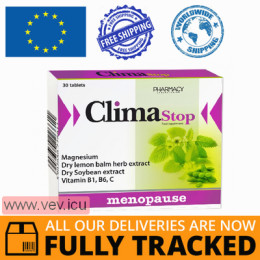
ClimaStop 30 tablets — Made in Poland — Free Delivery
Product descriptionClimaStop is a dietary supplement that eliminates the entire spectrum of climacteric disorders. The preparation is effective at all stages of changes: early stages of vegetative-vascular disorders, middle stage of urogenital and sexual disorders, late stage of somatic changes..
$28.48
Buyers Online
- Customer from Brooklyn updated their account details
- Customer from Brooklyn logged in
- Customer from Strongsville logged in
- Customer from Brooklyn updated their account details
- Customer from Brooklyn placed a new order for VOLTAREN MAX GEL 180G - MADE IN SWITZERLAND - FREE SHIPPING
- Customer from Brooklyn logged in
- Customer placed a new order for DEBUTIR FORTE 60 СAPS — MADE IN POLAND- FREE SHIPPING
- Customer from Ottawa updated their account details
- Customer from Ottawa registered for an account
- Customer placed a new order for STRESAM 50MG 60 PILLS - MADE IN FRANCE - FREE SHIPPING
- Customer placed a new order for ACNE-DERM Cream 2p x 20Gr — Made in Poland by Uniapharm — Free Delivery
- Customer placed a new order for Ascorbic acid 0,05g 2p x 160 tablets — Made in Ukraine — Free Delivery
- Customer placed a new order for Fanigan 100 tablets — Made in India — Free Delivery
- Customer from Raleigh placed a new order for Essentiale Forte 300 mg, 2p x 50 capsules — Made in Poland — Free Delivery
- Customer from Raleigh logged in
- Customer placed a new order for TENOTEN FOR CHILDREN 40 PILLS — MADE IN LITHUANIA — FREE SHIPPING
- Customer from Raleigh logged in
- Customer placed a new order for Aqua Maris for Children from Birth nasal drops 10 ml — Made in Croatia — Free Deliver
- Customer from Raleigh logged in
- Customer from Raleigh placed a new order for Essentiale Forte 300 mg, 2p x 50 capsules — Made in Poland — Free Delivery