Androgenetic alopecia
Understanding Androgenetic Alopecia: Causes, Symptoms, and Treatment Options
Androgenetic alopecia, also known as male pattern baldness or female pattern hair loss, is a common type of hair loss that affects both men and women. It is a genetic condition that causes hair follicles to shrink over time, leading to thinning hair and eventually hair loss. In this article, we will explore the causes, symptoms, and treatment options for androgenetic alopecia.
Causes of Androgenetic Alopecia:
Androgenetic alopecia is primarily caused by a combination of genetic and hormonal factors. It is believed that the condition is inherited from both the mother's and father's side of the family. The genetic component of androgenetic alopecia involves inheriting certain genes that make hair follicles sensitive to the effects of dihydrotestosterone (DHT), a hormone derived from testosterone. When DHT levels increase in the scalp, it can bind to the hair follicles and cause them to shrink, resulting in shorter, thinner hair growth cycles and eventually leading to hair loss.
Hormonal factors also play a role in androgenetic alopecia. DHT, which is a derivative of testosterone, is the main hormonal culprit. It is produced in the hair follicles and is responsible for miniaturizing the hair follicles, leading to a decrease in hair shaft diameter and hair growth.
Symptoms of Androgenetic Alopecia:
The main symptom of androgenetic alopecia is hair loss that follows a specific pattern. In men, it typically starts with a receding hairline at the temples, which gradually progresses to form an "M" shape, with thinning hair on the crown of the head. In women, androgenetic alopecia usually presents as diffuse hair thinning over the crown and top of the scalp, with the frontal hairline remaining intact.
Other symptoms of androgenetic alopecia may include an increase in hair shedding, a decrease in hair density, and a decrease in hair shaft diameter. In some cases, individuals with androgenetic alopecia may also experience itching or tingling sensations on the scalp.
Treatment Options for Androgenetic Alopecia:
While androgenetic alopecia is a genetic condition that cannot be cured, there are several treatment options available to manage its symptoms and slow down hair loss. Some of the commonly used treatment options for androgenetic alopecia include:
Medications: There are FDA-approved medications that can help slow down the progression of androgenetic alopecia and promote hair regrowth. Minoxidil, a topical medication, and finasteride, an oral medication, are two of the most commonly prescribed medications for androgenetic alopecia. Minoxidil works by increasing blood flow to the hair follicles and promoting hair growth, while finasteride works by blocking the conversion of testosterone to DHT, thus reducing the levels of DHT in the scalp.
Low-level laser therapy (LLLT): LLLT is a non-invasive treatment option that uses red light to stimulate hair growth. It is believed to work by increasing blood flow to the hair follicles and promoting cell metabolism, which can help improve the health of the hair follicles and promote hair growth.
Hair transplant surgery: Hair transplant surgery involves removing hair follicles from one part of the body (usually the back of the scalp) and transplanting them to areas with thinning or no hair. This surgical procedure can provide long-lasting results, but it can be expensive and may require multiple sessions.
Lifestyle changes: Making certain lifestyle changes, such as managing stress, maintaining a healthy diet, and avoiding tight hairstyles or excessive heat and chemical treatments, may help slow down hair loss and promote hair growth.
Wigs or hairpieces: Wearing wigs or hairpieces can be a temporary solution for those who are experiencing hair loss due to androgenetic alopecia. They can help improve the appearance of the hair and boost self-confidence.
It's important to note that not all treatment options may work for everyone, and results can vary. It's best to consult with a qualified healthcare professional or a dermatologist specializing in hair loss to determine the most appropriate treatment plan for your individual needs.
In conclusion, androgenetic alopecia is a common form of hair loss that is primarily caused by genetic and hormonal factors. It can result in hair thinning and eventual hair loss, but there are treatment options available to manage its symptoms and slow down its progression. Medications, low-level laser therapy, hair transplant surgery, lifestyle changes, and wearing wigs or hairpieces are some of the commonly used treatment options. Consulting with a healthcare professional or a dermatologist specializing in hair loss can help determine the most suitable treatment plan for managing androgenetic alopecia. Remember, early intervention is often key to achieving the best results in managing this condition.









Products viewed
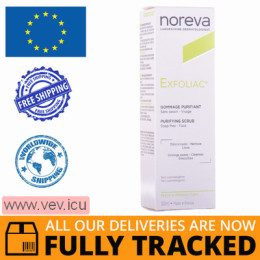
Noreva Exfoliac Purifying Scrub 50 ml — Made in France — Free Delivery
Product descriptionNoreva's Exfoliac Gel removes dead cells and impurities (thanks to exfoliating microspheres) and evens out the skin's texture.PeculiaritiesThe product contains peeling microgranules with active ingredients that delicately exfoliate the stratum corneum, remove toxins, soothe rednes..
$26.50
Buyers Online
- Customer from Brooklyn updated their account details
- Customer from Brooklyn logged in
- Customer from Strongsville logged in
- Customer from Brooklyn updated their account details
- Customer from Brooklyn placed a new order for VOLTAREN MAX GEL 180G - MADE IN SWITZERLAND - FREE SHIPPING
- Customer from Brooklyn logged in
- Customer placed a new order for DEBUTIR FORTE 60 СAPS — MADE IN POLAND- FREE SHIPPING
- Customer from Ottawa updated their account details
- Customer from Ottawa registered for an account
- Customer placed a new order for STRESAM 50MG 60 PILLS - MADE IN FRANCE - FREE SHIPPING
- Customer placed a new order for ACNE-DERM Cream 2p x 20Gr — Made in Poland by Uniapharm — Free Delivery
- Customer placed a new order for Ascorbic acid 0,05g 2p x 160 tablets — Made in Ukraine — Free Delivery
- Customer placed a new order for Fanigan 100 tablets — Made in India — Free Delivery
- Customer from Raleigh placed a new order for Essentiale Forte 300 mg, 2p x 50 capsules — Made in Poland — Free Delivery
- Customer from Raleigh logged in
- Customer placed a new order for TENOTEN FOR CHILDREN 40 PILLS — MADE IN LITHUANIA — FREE SHIPPING
- Customer from Raleigh logged in
- Customer placed a new order for Aqua Maris for Children from Birth nasal drops 10 ml — Made in Croatia — Free Deliver
- Customer from Raleigh logged in
- Customer from Raleigh placed a new order for Essentiale Forte 300 mg, 2p x 50 capsules — Made in Poland — Free Delivery