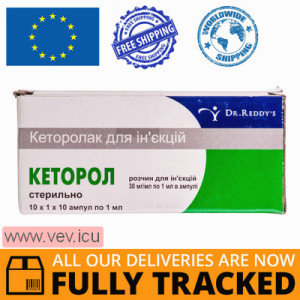
Pharmacodynamics. Ketorol is an NSAID with pronounced analgesic, antipyretic and anti-inflammatory effects. the mechanism of action is associated with a blockade in the peripheral tissues of the enzyme cog, as a result of which the biosynthesis of prostaglandins is inhibited - modulators of pain sensitivity, thermoregulation and inflammation. ketorol is a racemic mixture of [-] s and [+] r-enantiomers, while the analgesic effect is due to the [-] s-form. ketorol does not affect opioid receptors and respiratory function, does not have a sedative and anxiolytic effect, and does not cause preparation dependence. ketorolac also inhibits platelet aggregation. the ability of platelets to aggregate is restored after 24–48 hours. The preparation does not cause withdrawal symptoms after discontinuation of the preparation.
After oral administration, Ketorolac is rapidly absorbed and completely absorbed in the gastrointestinal tract. Cmax in blood plasma is reached on average 44 minutes after taking 10 mg and is 0.7-1.1 μg / ml.
After intravenous administration of 30 mg of Ketorol, its Cmax in blood plasma is reached 50 minutes after a single injection and is 2.2–3 μg / ml. T½ of the end products of Ketorol decomposition in young adult patients is 5.3 hours, the average total clearance is 0.023 ml / min / kg. After a single injection of 10 mg of Ketorol, Cmax in blood plasma is reached after 5.4 minutes and is 2.4 μg / ml. T½ is 5.1 hours, the average volume of distribution is 0.15 l / kg, the total clearance is 0.35 ml / min / kg.
In patients over the age of 65, T½ of the end products of ketorolac, compared with young healthy volunteers, increases to 7 hours (4.3–8.6 hours). The total plasma clearance is reduced to 0.019 L / kg.
The pharmacokinetics of ketorolac after single and multiple use does not change and is linear. Equilibrium plasma concentrations of the preparation are achieved when the preparation is administered every 6 hours throughout the day. The clearance of the preparation with repeated use remains constant. Ketorolac is 99% bound to blood plasma proteins, the degree of binding does not depend on the concentration of the preparation in the blood.
Ketorolac metabolites are excreted from the body by the kidneys, 94% of the administered dose is excreted in the urine, 6% is excreted in the feces.
In patients with impaired renal function, the excretion of ketorolac is slowed down, which is manifested by an elongation of T½ and a decrease in clearance compared with young healthy individuals.
In patients with impaired liver function, no changes in the pharmacokinetics of ketorolac were observed, but the time to reach Cmax of the preparation in blood plasma and T½ slightly increased compared with young healthy volunteers.
Pills. relief of moderate to severe pain in the postoperative period for a short time.
Rr. Relief of moderate to severe pain in the postoperative and post-traumatic period, inclusive.
Ketorol is not indicated for the treatment of chronic pain syndrome, but only for acute pain.
Pills. Adults and children over the age of 16 Ketorol tablets are prescribed 10 mg every 4-6 hours if necessary. The maximum daily dose is 40 mg. When transferring patients from parenteral treatment to oral administration of the preparation, the total daily dose of ketorolac should not exceed 90 mg for adults and 60 mg for patients over the age of 65 years, patients with impaired renal function and patients weighing 50 kg. On the day of transfer from parenteral administration to taking tablets, the daily dose of tablets should not exceed 40 mg. The duration of the course of treatment with Ketorol in the form of tablets is no more than 7 days.
Rr. Adults and children over the age of 16 are prescribed Ketorol intramuscularly or intravenously at an initial dose of 10 mg, followed by doses of 10–30 mg every 4–6 hours, if necessary. The maximum daily dose is 90 mg for adults and 60 mg for patients over the age of 65, patients with impaired renal function and patients weighing 50 kg. The maximum duration of parenteral administration of the preparation is 2 days. When transferring patients from parenteral treatment to oral administration of the preparation, the total daily dose of ketorolac should not exceed 90 mg for adults and 60 mg for patients over the age of 65, patients with impaired renal function and patients weighing 50 kg. On the day of transfer from parenteral administration to taking tablets, the daily dose of tablets should not exceed 40 mg. The duration of combined parenteral and oral administration of the preparation should not exceed 5 days.
Contraindications
Hypersensitivity to ketorolac or other preparations that belong to the NSAID group, allergic reactions to acetylsalicylic acid; ba; active phase stomach and duodenal ulcers, as well as a history of perforation or gastrointestinal bleeding; severe renal dysfunction; high risk of postoperative bleeding, incomplete hemostasis, hemorrhagic stroke; congestive heart failure (fluid retention in the body is noted); a history of erosive and ulcerative diseases of the gastrointestinal tract; hemorrhagic diathesis, including bleeding disorders; concomitant administration of anticoagulants, including low-dose heparin (2500–5000 units every 12 hours); a history of nasal polyposis syndrome, angioedema, bronchospasm; concomitant use of other NSAIDs, oxpentifillin, probenecid or lithium salts; use before surgical interventions and during the operation, the period of pregnancy and lactation, age up to 16 years.
Side effects
From the gastrointestinal tract: nausea, vomiting, dyspepsia, abdominal pain, change in taste, erosive and ulcerative lesions of the gastrointestinal tract, bleeding, ulcer perforation, diarrhea, dry mouth, severe thirst, flatulence, constipation, cholestatic jaundice, hepatitis, hepatomegaly, acute pancreatitis stomatitis, a feeling of fullness in the stomach, gastritis, esophagitis, belching, hematemesis, melena, exacerbation of colitis and Crohn's disease, liver failure.
From the side of the central nervous system: drowsiness, impaired concentration, euphoria, headache, dizziness, anxiety, asthenic syndrome, increased sweating, paresthesia, insomnia, malaise, fatigue, agitation, unusual dreams, confusion, vertigo, hyperkinesia, rarely - aseptic meningitis ( fever, severe headache, cramps, stiff neck and / or back muscles), hyperactivity (mood changes, anxiety), hallucinations, depression, psychosis, fainting.
From the side of the cardiovascular system: bradycardia, hot flashes, purpura, pallor, palpitations, chest pain. The development of edema, hypertension and heart failure associated with the use of NSAIDs was also noted. Data from clinical and epidemiological studies have shown that the use of some NSAIDs, especially in high doses and for a long time, can increase the risk of arterial thromboembolic complications, for example, myocardial infarction or stroke.
From the side of hematopoiesis: aplastic anemia, hemolytic anemia, agranulocytosis, leukopenia, thrombocytopenia.
From the respiratory system: bronchospasm, dyspnea, pulmonary edema, laryngeal edema, asthma, exacerbation of asthma.
From the urinary system: nephrotic syndrome, oliguria, dysuria, increased frequency of urination, hyponatremia, hyperkalemia, increased levels of creatinine and urea, interstitial nephritis, urinary retention, back pain, acute renal failure, hematuria, azotemia, hemolyticouremic syndrome (hemolytic anemia, renal , thrombocytopenia, purpura).
On the part of the skin: rash (including maculopapular rash), purpura, exfoliative dermatitis (redness, thickening or scaling of the skin, enlargement and / or tenderness of the palatine tonsils), photosensitivity, Lyell's syndrome.
From the hemostatic system: bleeding from a postoperative wound, nosebleeds, rectal bleeding, increased bleeding time.
Reproductive system disorders: female infertility.
Allergic reactions: urticaria, Stevens-Johnson syndrome, pemphigus, anaphylaxis or anaphylactoid reactions, angioedema.
From the senses: hearing loss, ringing in the ears, optic neuritis.
General disorders: increased sweating, edema, myalgia, soreness at the injection site.
Changes in laboratory parameters: eosinophilia, increased activity of hepatic transaminases.
Others: weight gain, increased body temperature.
Special instructions
NSAIDs should be used with caution in patients with a history of ulcerative colitis and Crohn's disease.
The use of ketorolac, like other inhibitors of prostaglandin synthesis, can lead to an increase in serum urea, creatinine and potassium levels even after the first dose.
The use of the preparation in patients with hypertension, congestive heart failure, established ischemic heart disease, peripheral arterial disease and cerebrovascular disease is possible after careful weighing of the risk / benefit. It is also necessary to weigh the benefit / risk ratio before starting long-term therapy in patients with risk factors for cardiovascular diseases, such as hypertension, hyperlipidemia, diabetes mellitus, and smoking.
Patients with systemic lupus erythematosus and connective tissue diseases increase the risk of developing aseptic meningitis. Elderly patients are more susceptible to side effects, therefore, it is necessary to pay increased attention to such patients and prescribe the preparation in low doses. For patients over the age of 65, the daily dose is 60 mg. For patients with impaired renal function or with a history of kidney disease, the daily dose is 60 mg. The use of the preparation can cause an increase in the activity of liver enzymes in the blood serum. In patients with pre-existing liver dysfunction, this reaction can cause more serious liver disease. If a deviation from the normal values of liver samples is detected, the use of ketorolac should be discontinued. Ketorolac affects platelet aggregation, therefore, the condition of patients with impaired blood coagulation should be carefully monitored.
Use during pregnancy and lactation. The safety and efficacy of using the preparation by pregnant and breastfeeding women has not been established, therefore, the use of the preparation in this category of patients is not recommended.
Children. The preparation is not used in children under the age of 16.
Influence on the ability to drive vehicles or other mechanisms. Given the possibility of such adverse reactions as drowsiness, dizziness, impaired concentration, you should avoid driving and working with mechanisms that require increased attention.
Interactions
Ketorolac slightly reduces the binding of warfarin to blood plasma proteins. In vitro studies have shown that at therapeutic concentrations of salicylate, the binding of ketorolac to blood plasma proteins decreases from 99.2 to 97.5%, which can lead to an increase in the content of free ketorolac. ketorolac reduces the diuretic effect of furosemide by about 20%. with the combined appointment of probenicide and ketorol, an increase in the concentration of ketorolac in the blood plasma and an increase in its t½ from the body are noted. with simultaneous use with lithium preparations, it is possible to inhibit the renal clearance of lithium, therefore, the lithium content in the blood plasma may increase. ketorolac can interact with non-depolarizing muscle relaxants, which can lead to respiratory failure. the simultaneous use of ketorolac with APF inhibitors may increase the risk of developing renal dysfunction, especially in patients with hypovolemia.
The simultaneous use of ketorolac with anticoagulants may increase the risk of bleeding.
The preparation should not be administered concurrently with the following preparations: other NSAIDs, including selective COX-2 inhibitors, due to increased side effects. NSAIDs should not be used within 8–12 days of taking mifepristone, as this may reduce the effects of mifepristone.
Preparations that can be used concomitantly with ketorolac with caution. Cardiac glycosides, since it is possible to increase heart failure and increase the concentration of cardiac glycosides in the blood plasma. Ketorolac and other NSAIDs can reduce the hypotensive effect of β-adrenergic receptor blockers. When used simultaneously with cyclosporine, nephrotoxicity increases. There is a risk of nephrotoxicity when used concomitantly with tacrolimus. With simultaneous use with GCS, the risk of developing gastrointestinal ulcers and bleeding increases. When used simultaneously with selective serotonin and oxpentifyllin reuptake inhibitors, the risk of bleeding increases. Care should be taken to prescribe a preparation with methotrexate, since there have been reports of a decrease in the clearance of methotrexate when used simultaneously with some inhibitors of prostaglandin synthesis, which can increase its toxicity. With simultaneous use with quinolines, the risk of seizures increases. NSAIDs, when used simultaneously with zidovudine, increase hematological toxicity. There is evidence of an increased risk of hemarthrosis and hematoma in HIV-positive patients with hemophilia who received simultaneous treatment with zidovudine and ibuprofen.
Overdose
Symptoms: abdominal pain, nausea, vomiting, stomach ulcers or erosive gastritis, renal dysfunction. the specific antidote is unknown. in case of an overdose, gastric lavage with the introduction of sorbents (activated carbon) and symptomatic therapy are recommended.
Storage conditions
Tablets - in a dry, dark place at a temperature of 15-25 ° C. solution - protected from light place at a temperature of 2-25 ° C.