


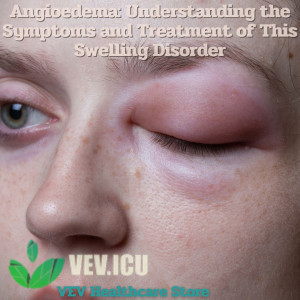
Angioedema: Understanding the Symptoms and Treatment of This Swelling Disorder

- 11 April 2023 19:08:40
- Views: 1775

Angioedema is a condition characterized by sudden swelling beneath the skin's surface, often in the face, lips, tongue, throat, or extremities. This swelling occurs due to the accumulation of fluid in the deeper layers of the skin and can be painful and potentially life-threatening if it affects the airway. Understanding the symptoms and treatment options for angioedema is crucial for prompt diagnosis and appropriate management of this condition.
Symptoms of Angioedema:
Angioedema typically presents as sudden and severe swelling that can occur with or without accompanying itching or redness. The swelling may be localized to a specific area, such as the lips, eyes, or hands, or it may involve larger areas of the body. In some cases, angioedema can affect the airway, leading to symptoms such as difficulty breathing, hoarseness, or a swollen tongue or throat. These symptoms may progress rapidly and require immediate medical attention.
Angioedema can occur as an isolated episode or may be recurrent, lasting for several hours to a few days. It can also be associated with other conditions such as urticaria (hives), which is characterized by itchy raised skin lesions. Angioedema can be categorized into two types: allergic and non-allergic. Allergic angioedema is usually triggered by an allergic reaction to certain foods, medications, or insect bites. Non-allergic angioedema, on the other hand, may be caused by various factors such as stress, hormonal changes, or genetic predisposition.
Treatment Options for Angioedema:
The treatment of angioedema depends on the underlying cause, severity of symptoms, and the involvement of the airway. Prompt medical evaluation and intervention are crucial in cases where there is any compromise of the airway. Treatment options for angioedema may include:
Medications: Antihistamines, corticosteroids, and epinephrine are commonly used medications to reduce the swelling and relieve symptoms associated with angioedema. Antihistamines block the effects of histamine, a chemical that is released during an allergic reaction, and can help reduce itching and swelling. Corticosteroids, such as prednisone, are potent anti-inflammatory medications that can help reduce the severity and duration of angioedema episodes. Epinephrine, also known as adrenaline, is a fast-acting medication that can be administered in severe cases to quickly relieve swelling and improve breathing.
Avoidance of triggers: If the angioedema is triggered by a specific allergen, such as a food or medication, identifying and avoiding the trigger is an important part of managing the condition. A thorough evaluation by an allergist or immunologist may be necessary to identify the trigger and develop a plan to avoid exposure.
Supportive measures: In cases of mild angioedema, self-care measures such as applying cold compresses to the affected area, elevating the affected body part, and avoiding tight clothing or jewelry around the affected area may help reduce swelling and discomfort.
Management of underlying conditions: If angioedema is associated with an underlying medical condition, such as an autoimmune disorder, hormonal imbalance, or genetic disorder, managing the underlying condition may be necessary to prevent recurrent episodes of angioedema.
In some cases, angioedema may be refractory to conventional treatment, and additional interventions such as intravenous medications, plasmapheresis (a process that removes plasma from the blood and replaces it with other fluids), or other specialized treatments may be required.
In conclusion, angioedema is a condition characterized by sudden and severe swelling that can occur in various parts of
Buyers Online
- Customer from Brooklyn updated their account details
- Customer from Brooklyn logged in
- Customer from Strongsville logged in
- Customer from Brooklyn updated their account details
- Customer from Brooklyn placed a new order for VOLTAREN MAX GEL 180G - MADE IN SWITZERLAND - FREE SHIPPING
- Customer from Brooklyn logged in
- Customer placed a new order for DEBUTIR FORTE 60 СAPS — MADE IN POLAND- FREE SHIPPING
- Customer from Ottawa updated their account details
- Customer from Ottawa registered for an account
- Customer placed a new order for STRESAM 50MG 60 PILLS - MADE IN FRANCE - FREE SHIPPING
- Customer placed a new order for ACNE-DERM Cream 2p x 20Gr — Made in Poland by Uniapharm — Free Delivery
- Customer placed a new order for Ascorbic acid 0,05g 2p x 160 tablets — Made in Ukraine — Free Delivery
- Customer placed a new order for Fanigan 100 tablets — Made in India — Free Delivery
- Customer from Raleigh placed a new order for Essentiale Forte 300 mg, 2p x 50 capsules — Made in Poland — Free Delivery
- Customer from Raleigh logged in
- Customer placed a new order for TENOTEN FOR CHILDREN 40 PILLS — MADE IN LITHUANIA — FREE SHIPPING
- Customer from Raleigh logged in
- Customer placed a new order for Aqua Maris for Children from Birth nasal drops 10 ml — Made in Croatia — Free Deliver
- Customer from Raleigh logged in
- Customer from Raleigh placed a new order for Essentiale Forte 300 mg, 2p x 50 capsules — Made in Poland — Free Delivery
Latest




Bestsellers