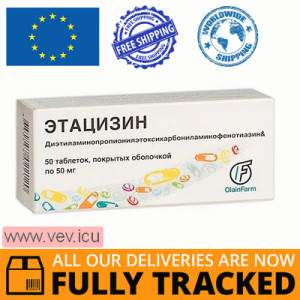
Ethacizine 50mg: Mastering the Rhythm of Life

- 09 February 2024 16:59:52
- Views: 228
Ethacizine 50mg: Mastering the Rhythm of Life
Unveiling the Power of Ethacizine
Ethacizine, a classic antiarrhythmic preparation, stands as a stalwart guardian against the tumultuous rhythms of the heart. Delve into its pharmacodynamics and pharmacokinetics to unlock the secrets of its efficacy.
Pharmacodynamics: Taming the Waves
Mastering the Action Potential
Ethacizine exerts its influence by tempering the rate of action potential propagation, without altering the rest potential. By predominantly targeting sodium channels, both on the outer and inner surfaces of cell membranes, it diminishes the amplitude and decelerates the processes of inactivation and reactivation of fast sodium currents. Furthermore, it impedes calcium ion influx through slow channels, thereby elongating the refractory periods of the atria and AV-node.
Orchestrating Cardiac Conduction
Ethacizine orchestrates the symphony of cardiac conduction by attenuating the rate of action potential rise in atrial and ventricular fibers. It curtails excitation conduction along the AV-node and Kent bundle, while also suppressing sinoatrial conduction, particularly in sick sinus syndrome. Notably, it extends the QRS complex on ECG by approximately 25%, owing to its deceleration of ventricular conduction within the Purkinje system.
Beyond Rhythm Control
In addition to its antiarrhythmic prowess, Ethacizine exerts a negative inotropic effect and exhibits local anesthetic and antispasmodic activities, contributing to its multifaceted therapeutic profile.
Pharmacokinetics: A Journey Through the Body
Absorption and Distribution
Upon oral administration, Ethacizine swiftly traverses the digestive tract, manifesting in the bloodstream within 30-60 minutes. Peak plasma concentration is attained after 2.5–3 hours, with a bioavailability of 40%. Notably, 90% of Ethacizine binds to plasma proteins, ensuring its widespread distribution.
Metabolism and Elimination
Ethacizine undergoes extensive hepatic metabolism during its initial transit through the liver, yielding metabolites with antiarrhythmic activity. Subsequently, it is excreted in the urine predominantly as metabolites, completing its journey through the body.
Indications and Application: Guiding the Therapy
Navigating Treatment Pathways
Ethacizine finds its therapeutic niche in the management of ventricular and supraventricular arrhythmias, encompassing extrasystole, paroxysms of atrial fibrillation and flutter, and tachycardia. Administered orally, irrespective of food intake, it initiates at 50mg 2-3 times daily, with dosage adjustments guided by clinical response and electrocardiographic monitoring.
Tailored Maintenance Therapy
Upon achieving a stable antiarrhythmic effect, maintenance therapy ensues with individually tailored doses, ensuring sustained rhythm control. In select cases, combination therapy with β-adrenergic receptor blockers may be warranted to optimize therapeutic outcomes.
Embrace Harmony with Ethacizine 50mg
Your Partner in Rhythm Management
Embrace the rhythm of life with Ethacizine 50mg by your side. From quelling arrhythmic storms to fostering cardiac serenity, Ethacizine empowers you to reclaim control over your heart's cadence. Trust in its proven efficacy and embark on a journey towards rhythmical harmony and vitality.
Buyers Online
- Customer from Trieste logged in
- Customer placed a new order for NIMESIL 2G X 30 SACHETS 100 MG — MADE IN GERMANY — FREE SHIPPING
- Customer from Brooklyn updated their account details
- Customer from Brooklyn logged in
- Customer from Strongsville logged in
- Customer from Brooklyn updated their account details
- Customer from Brooklyn placed a new order for VOLTAREN MAX GEL 180G - MADE IN SWITZERLAND - FREE SHIPPING
- Customer from Brooklyn logged in
- Customer placed a new order for DEBUTIR FORTE 60 СAPS — MADE IN POLAND- FREE SHIPPING
- Customer from Ottawa updated their account details
- Customer from Ottawa registered for an account
- Customer placed a new order for STRESAM 50MG 60 PILLS - MADE IN FRANCE - FREE SHIPPING
- Customer placed a new order for ACNE-DERM Cream 2p x 20Gr — Made in Poland by Uniapharm — Free Delivery
- Customer placed a new order for Ascorbic acid 0,05g 2p x 160 tablets — Made in Ukraine — Free Delivery
- Customer placed a new order for Fanigan 100 tablets — Made in India — Free Delivery
- Customer from Raleigh placed a new order for Essentiale Forte 300 mg, 2p x 50 capsules — Made in Poland — Free Delivery
- Customer from Raleigh logged in
- Customer placed a new order for TENOTEN FOR CHILDREN 40 PILLS — MADE IN LITHUANIA — FREE SHIPPING
- Customer from Raleigh logged in
- Customer placed a new order for Aqua Maris for Children from Birth nasal drops 10 ml — Made in Croatia — Free Deliver
Latest


Bestsellers